



Sentiment classification enables AI systems to identify whether a piece of content expresses positive, negative, neutral, or more nuanced emotional intent. It supports applications ranging from customer experience platforms and social listening tools to conversational AI and voice assistants. However, the accuracy of these systems depends heavily on the quality of the datasets used to train them.
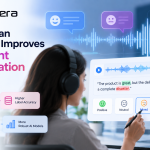
Human feedback plays a critical role in making sentiment classification datasets more reliable. While automated methods can help process large volumes of information, human annotators provide contextual understanding that algorithms may miss. They can recognize sarcasm, implied opinions, conflicting emotions, cultural nuances, and subtle differences in sentiment intensity.
For organizations developing sophisticated AI models, incorporating structured human feedback can transform a basic collection of labeled examples into a more representative and dependable training dataset.
Why Human Feedback Matters in Sentiment Classification
Sentiment is rarely expressed in a perfectly straightforward way. A customer might write, “The product arrived early, but it stopped working the next day.” The statement contains both positive and negative information. A simple keyword-based approach could struggle to determine the overall sentiment.
Human annotators can interpret the complete context and determine how the sentiment should be classified according to predefined guidelines.
Research into sentiment annotation has also highlighted the difficulty of achieving consistent judgments when examples are ambiguous. Annotation instructions, annotator engagement, and the interpretation of complex language can all influence agreement between reviewers.
Human feedback therefore does more than attach a label to a data point. It helps organizations understand where sentiment categories are clear, where they overlap, and where the annotation framework needs improvement.
1. Improving Label Accuracy
One of the most direct benefits of human feedback is improved label accuracy.
Automated or weak labeling techniques may infer sentiment from star ratings, keywords, emojis, or previously trained models. These approaches can introduce noise. For example, a customer may give a product five stars while complaining about delivery, or use a positive word sarcastically in a negative statement.
Human annotators can evaluate the complete context before assigning a label. Multiple independent annotations can then be compared to identify disagreements.
When disagreements occur, quality teams can review the examples, determine the appropriate interpretation, and update the dataset or annotation guidelines accordingly.
This iterative process helps reduce mislabeled examples that could otherwise teach an AI model incorrect sentiment patterns.
2. Capturing Context, Sarcasm, and Negation
Context is one of the biggest challenges in sentiment classification.
Consider phrases such as:
-
“Great, another software update that broke everything.”
-
“I wouldn't say the customer service was terrible.”
-
“The camera is excellent, although the battery is disappointing.”
The literal words do not always represent the actual sentiment. Sarcasm, negation, contrast, rhetorical questions, and indirect criticism can substantially change the meaning.
Human feedback helps identify these difficult cases and ensures they are deliberately represented in the dataset. Instead of removing challenging examples, organizations can use them to make sentiment models more robust.
This is especially valuable when training models intended to operate in real-world environments, where users rarely communicate in perfectly structured language.
3. Making Sentiment Labels More Granular
Human feedback can also help organizations move beyond simple positive-versus-negative classification.
Depending on the application, datasets may distinguish between:
-
Strongly positive
-
Mildly positive
-
Neutral
-
Mildly negative
-
Strongly negative
-
Mixed sentiment
-
Frustration
-
Satisfaction
-
Disappointment
-
Anger
Annotators can help establish practical boundaries between these categories.
For example, “The product is okay” and “This is the best product I've ever purchased” are both technically positive, but they represent very different levels of enthusiasm.
Human feedback allows these distinctions to be incorporated into the labeling framework, creating datasets that support more sophisticated sentiment models.
4. Identifying Ambiguous and Difficult Examples
Not every piece of content has a single obvious sentiment.
An effective annotation workflow should allow annotators to flag uncertainty rather than forcing them to select an arbitrary category. These difficult examples can subsequently be reviewed by senior annotators or subject-matter experts.
Research on sentiment annotation shows why this matters: ambiguous statements can produce multiple reasonable interpretations, particularly when perspective, conflicting opinions, sarcasm, or implied sentiment is involved.
Instead of treating disagreement as simply an error, organizations can use it as feedback about the dataset itself.
If the same labels repeatedly cause confusion, the problem may lie in the taxonomy or annotation guidelines rather than the annotators.
5. Reducing Dataset Bias
Human feedback can expose biases that may otherwise remain hidden.
Sentiment expressions vary according to:
-
Language
-
Culture
-
Region
-
Industry
-
Customer demographics
-
Communication channel
-
Product category
A phrase considered positive in one cultural or linguistic context may have a different interpretation elsewhere.
Human reviewers familiar with relevant languages, domains, and communication styles can help identify these differences. This makes the dataset more representative of the users the eventual AI system is expected to serve.
For multilingual and global AI applications, this becomes particularly important because linguistic variation can affect how sentiment is expressed and interpreted.
6. Improving Audio and Conversational Sentiment Data
Human feedback becomes even more important when sentiment classification involves spoken language.
Audio sentiment is influenced not only by words but also by characteristics such as tone, pitch, speaking rate, pauses, emphasis, and vocal intensity. A speaker may say something positive while their tone communicates frustration or dissatisfaction.
Human annotators can evaluate these signals alongside the transcript and assign more meaningful labels.
Organizations developing speech analytics, call-center AI, emotion recognition, and conversational systems can benefit from specialized audio annotation outsourcing services that combine structured annotation workflows with human quality control.
Working with an experienced audio annotation company can also help businesses scale large audio datasets while maintaining consistent labeling standards across different speakers, accents, languages, and recording conditions.
7. Creating a Continuous Feedback Loop
Human feedback should not necessarily stop once the initial dataset has been created.
A stronger approach is to establish a continuous feedback loop:
Collect data → Annotate → Review → Measure agreement → Identify difficult cases → Refine guidelines → Re-annotate → Validate
This process allows organizations to improve their datasets over time.
Annotation disagreement metrics can reveal where additional training is needed, while expert adjudication can resolve particularly complex examples. Research on human feedback similarly emphasizes the importance of annotation quality, agreement, and well-designed guidelines when building reliable datasets.
Human Feedback Creates More Reliable Sentiment AI
The effectiveness of a sentiment classification model ultimately depends on the quality and relevance of its training data. Human feedback strengthens that foundation by bringing contextual interpretation, domain knowledge, linguistic awareness, and quality control into the annotation process.
Rather than viewing human annotation simply as a labeling task, organizations should treat it as an iterative data-quality process. Annotators can identify ambiguity, uncover bias, improve label definitions, and highlight the real-world language patterns that automated systems may overlook.
For companies building sentiment analysis, conversational AI, speech intelligence, and emotion-aware applications, high-quality human feedback can make the difference between a dataset that merely contains labels and one that genuinely represents how people communicate.
At Annotera, structured human annotation and rigorous quality workflows help organizations transform complex text and audio data into dependable AI training datasets. With the right combination of technology, trained annotators, and continuous quality improvement, businesses can build sentiment classification systems that understand human communication more accurately and consistently.