





Professional growth rarely happens through a single meeting, workshop, or training session. Meaningful improvement usually requires a clear process that helps people identify challenges, set realistic goals, take action, review results, and make adjustments. This is where a comprehensive coaching cycle can make a significant difference.
A well-designed coaching cycle creates a structured path from reflection to action. It gives educators, leaders, and teams the opportunity to examine their current practices, identify areas for improvement, and develop practical strategies for reaching specific goals. At the center of this process is high quality action planning, which turns ideas and goals into manageable steps.
What Is a Comprehensive Coaching Cycle?
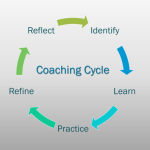
A comprehensive coaching cycle is a structured approach to professional learning and improvement. While different organizations may use different models, most coaching cycles include several connected stages.
These stages often include:
- Assessing the current situation
- Identifying a meaningful goal
- Developing an action plan
- Implementing agreed strategies
- Collecting evidence
- Reflecting on progress
- Adjusting the plan
The strength of the cycle comes from the connection between each stage. Assessment informs goal setting, goals guide action planning, action produces evidence, and evidence informs the next round of improvement.
Rather than treating coaching as a one-time conversation, this approach makes coaching an ongoing learning process.
Starting With Reflection and Evidence
Effective coaching should begin with an accurate understanding of the current situation. Before deciding what needs to change, coaches and participants need to examine available evidence.
For educators, this might include student work, classroom observations, assessment results, lesson plans, attendance information, or student feedback. For leaders, evidence might include team performance, implementation data, staff feedback, or progress toward organizational goals.
The purpose is not to criticize existing practices. Instead, evidence provides a starting point for productive discussion.
A coach can ask questions such as:
- What is currently working well?
- Where are learners or teams experiencing challenges?
- What patterns can we see in the available evidence?
- What factors may be contributing to the current results?
- What area would have the greatest impact if improved?
These questions help ensure that coaching conversations are based on real needs rather than assumptions.
Setting Clear and Meaningful Goals
Once the current situation is understood, the next step is establishing a focused goal.
A strong goal should be specific enough to guide action while remaining realistic within the available time and resources. Goals that are too broad can make it difficult to determine what actions should be taken.
For example, instead of saying, "Improve student learning," a more focused goal might be to improve students' ability to explain their thinking during classroom discussions.
The goal should also connect to meaningful outcomes. When participants understand why a goal matters, they are more likely to engage with the coaching process.
A comprehensive coaching cycle also allows goals to be revisited. If new evidence shows that the original goal needs to be modified, the plan can be adjusted rather than treated as a fixed commitment.
Building High Quality Action Planning
Goal setting provides direction, but action planning provides the roadmap.
High quality action planning breaks a larger goal into specific activities that can actually be implemented. A useful action plan should answer several basic questions:
- What will be done?
- Who will be responsible?
- When will each action occur?
- What resources are needed?
- What evidence will show progress?
- When will progress be reviewed?
For example, if an educator wants to increase meaningful student discussion, an action plan could include introducing structured discussion routines, modeling effective questioning techniques, observing student participation, and reviewing student responses after several lessons.
The plan should not contain unnecessary tasks. A small number of focused actions can be more effective than a long list that becomes difficult to manage.
Making Actions Measurable
One of the most important features of high quality action planning is the use of measurable evidence.
A participant should be able to determine whether an action is producing progress. This does not mean every coaching goal needs complicated statistics. Simple evidence can often provide useful information.
For example, evidence might include:
- Student work samples
- Observation notes
- Short assessments
- Participation records
- Teacher reflections
- Feedback surveys
- Lesson artifacts
- Progress-monitoring data
The coach and participant can agree in advance on what evidence will be collected. This makes later reflection more focused and reduces the possibility of relying only on personal impressions.
Coaching Through Implementation
Creating an action plan is only the beginning. The implementation stage is where coaching becomes especially valuable.
A coach can support the participant by helping anticipate challenges, reviewing progress, modeling strategies, observing practice, or providing constructive feedback.
Importantly, coaching should not simply tell people what to do. Strong coaching encourages participants to think through their own decisions.
Questions such as "What did you notice?" "What seemed to work?" and "What would you change next time?" can encourage deeper reflection.
This approach helps develop professional ownership. Participants become active problem-solvers rather than simply following instructions.
Using Feedback to Improve Practice
Feedback is another essential part of a comprehensive coaching cycle. Useful feedback should be specific, timely, and connected to the agreed goal.
Instead of providing general comments, a coach can focus on observable actions and their relationship to the desired outcome.
For example, rather than saying, "The lesson went well," a coach might discuss how a particular questioning technique increased student participation and explore whether that strategy should be used again.
Feedback should also create space for the participant's perspective. The person receiving coaching often has important information about classroom conditions, student needs, and practical challenges.
Reviewing Results and Adjusting the Plan
A coaching cycle should end with reflection, but reflection is not necessarily the end of the process.
After implementation, the coach and participant can review the evidence and ask:
- What changed?
- Which strategies appeared effective?
- What challenges remained?
- What evidence supports our conclusions?
- What should we continue?
- What should we modify?
This creates a continuous improvement mindset.
If an action does not produce the expected result, that does not automatically mean the coaching process failed. It may provide useful information about what needs to change. The action plan can be revised, and another cycle can begin.
Creating a Culture of Continuous Improvement
When comprehensive coaching cycles are used consistently, they can contribute to a broader culture of professional learning.
People begin to see improvement as an ongoing process rather than a response to failure. Reflection, evidence, collaboration, and experimentation become normal parts of professional practice.
High quality action planning also helps teams maintain focus. Instead of discussing improvement in general terms, team members can identify concrete actions, responsibilities, timelines, and evidence.
Over time, these habits can support stronger collaboration and more consistent implementation.
The Connection Between Coaching and Action Planning
A comprehensive coaching cycle and high quality action planning work best together.
The coaching cycle provides the structure for learning and reflection, while the action plan provides a practical route for turning goals into action. Neither needs to operate independently.
A strong process might look like this:
Identify → Set Goals → Plan → Act → Collect Evidence → Reflect → Adjust → Repeat
This simple sequence encourages purposeful action while leaving room for learning and adaptation.
Conclusion
Professional improvement requires more than good intentions. People need opportunities to reflect, clear goals, practical strategies, useful feedback, and evidence that helps them understand whether their efforts are working.
A comprehensive coaching cycle brings these elements together in a structured and supportive process. At the same time, high quality action planning ensures that professional goals are translated into specific, manageable steps.
When coaching and action planning are connected, improvement becomes more intentional, measurable, and sustainable. The process does not depend on finding a perfect strategy immediately. Instead, it creates a framework for learning from evidence, adjusting practice, and continuing to move toward meaningful outcomes.