
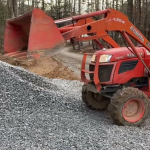





Choosing the right type of stone can make a big difference when building a driveway, walkway, drainage area, or other outdoor project. Two materials that often come up are crusher run driveway material and #57 rock. Although both are Blockedword/sentencee from crushed stone, they have different sizes, textures, and best uses.
If you are planning a gravel driveway or another landscaping project, understanding the difference between these materials can help you make a practical choice. So, what is 57 rock, and how does it compare with crusher run? Let's take a closer look.
What Is Crusher Run?
Crusher run is a type of crushed stone that contains a mixture of different particle sizes. It is commonly Blockedword/sentencee by crushing larger rocks into smaller pieces and allowing the resulting material to include both stone fragments and fine particles.
The combination of sizes is one of the main advantages of crusher run. Larger pieces provide structure, while the smaller particles fill the spaces between them. When compacted, crusher run can create a firm and relatively stable surface.
This makes it a popular choice for driveways, paths, patios, parking areas, and construction projects.
A crusher run driveway can be especially useful when homeowners want a durable gravel surface without installing asphalt or concrete. Proper preparation and installation are still important because the performance of any gravel driveway depends on drainage, soil conditions, thickness, and compaction.
What Is 57 Rock?
So, what is 57 rock?
#57 rock is a commonly used size of crushed stone. It generally consists of relatively small, clean pieces of stone, although the exact size range can vary somewhat depending on the local quarry and material specifications.
Unlike crusher run, #57 stone typically does not contain the same amount of fine material. The individual rocks are more uniform in size, allowing water to move through the spaces between them.
Because of its clean and relatively open structure, #57 rock is frequently used for drainage applications, landscaping, construction, and areas where water flow is important.
It can also be used for driveways and parking areas, but its performance is different from a compacted base material such as crusher run.
Crusher Run Driveway Benefits
A crusher run driveway offers several advantages for homeowners and property owners.
- Good Compaction
One of the biggest benefits of crusher run is its ability to compact. The combination of larger stones and smaller particles allows the material to lock together when properly compacted.
This can create a relatively firm driving surface that is less likely to shift than loose, uniformly sized gravel.
- Affordable Driveway Material
Crusher run is often considered a cost-effective option for creating a gravel driveway. Compared with some paved surfaces, gravel installation can require a lower initial investment.
The total cost will depend on the size of the driveway, local material prices, delivery fees, grading, excavation, and installation requirements.
- Suitable for Heavy Use
When installed over a properly prepared base, crusher run can handle regular vehicle traffic. It is commonly used for residential driveways, access roads, parking areas, and construction entrances.
Proper drainage and adequate material depth are important if the driveway will experience frequent or heavy traffic.
- Natural Appearance
A crusher run driveway has a simple, natural appearance that can complement many types of properties. It can work well around rural homes, farms, cabins, and traditional landscapes.
Benefits of #57 Rock
Understanding what is 57 rock also means understanding where this material performs best.
Excellent Drainage
One of the main advantages of #57 rock is its ability to allow water to pass through the spaces between the stones. This makes it useful around drainage systems, French drains, foundations, and other areas where water movement matters.
Landscaping Applications
#57 stone can also be used for landscaping projects. It can create attractive borders around gardens, trees, flower beds, and other outdoor spaces.
Construction Uses
Contractors may use #57 rock for various construction and drainage applications. Its relatively consistent size makes it useful when a clean stone layer is needed.
Crusher Run vs. #57 Rock
Although both materials come from crushed stone, they serve different purposes.
Crusher run contains a combination of stone sizes and fines. This allows it to compact tightly and form a stable surface. It is therefore often a better choice when you need a solid base or driveway surface.
#57 rock is cleaner and more uniformly sized. Because it contains fewer fines, it allows more water to move through the material.
In simple terms, think of crusher run as a material designed to lock and compact, while #57 rock is often selected when drainage and a clean stone layer are priorities.
Can You Use #57 Rock for a Driveway?
Yes, #57 rock can be used for a driveway, but it may not behave the same way as crusher run.
Because the stones are relatively uniform and do not contain as many fines, they may not compact into a solid surface as effectively as crusher run. Vehicles can move the stones over time, especially if the driveway is not properly prepared.
For this reason, some driveway projects use different stone materials for different layers. A compactable material can provide a stable base, while larger or cleaner stone may be used in other areas depending on drainage and design requirements.
The best choice depends on the soil, slope, traffic, drainage conditions, and intended appearance of the driveway.
How to Build a Crusher Run Driveway
Building a quality crusher run driveway starts with proper site preparation.
First, the driveway area should be cleared of vegetation, debris, and unsuitable soil. The ground may need to be excavated to provide enough room for the stone layers.
Next, the area should be graded to encourage proper drainage. Standing water can weaken a gravel driveway and cause ruts, potholes, and other problems.
The crusher run can then be spread across the prepared surface. The material should be distributed evenly and compacted using appropriate equipment.
Depending on the site, multiple layers may be needed. A professional contractor can determine the appropriate depth based on expected traffic, soil conditions, and local drainage requirements.
Which Material Should You Choose?
The right choice depends on what you are trying to accomplish.
Choose crusher run when you need a compactable material for a driveway base, path, parking area, or other surface that needs stability.
Consider #57 rock when drainage, landscaping, or a clean layer of uniformly sized stone is more important.
In some projects, both materials can be useful. Crusher run can provide a stable foundation, while #57 rock can be incorporated into drainage or other areas where water movement is needed.
Final Thoughts
If you are planning a new gravel driveway, knowing the difference between crusher run and #57 rock can help you avoid choosing the wrong material. A crusher run driveway can provide a firm, compacted surface when properly installed, while #57 rock is often valued for its clean appearance and drainage characteristics.
When comparing your options, consider more than just the price of the stone. Soil conditions, drainage, traffic, installation depth, grading, and compaction can all affect the long-term performance of the project.
If you are still wondering what is 57 rock or which crushed stone is best for your property, a local gravel supplier or experienced contractor can help you select the right material for your specific project.