




Moisture measurement plays an important role in maintaining the quality and reliability of industrial processes. Many industries use compressed air and process gases that must meet specific dryness requirements to protect equipment, maintain product quality, and support consistent operations. Even small quantities of water vapour can create challenges when gases are used in sensitive manufacturing environments or transported through industrial systems.
A dewpoint hygrometer provides useful information about the moisture present in a gas. By measuring the temperature at which condensation can begin, it helps operators understand gas dryness and evaluate moisture control systems. Portable instruments are particularly useful when technicians need to check different sampling points during inspections, maintenance, and quality control activities.
Why Dew Point Measurement Matters in Industry
Moisture can affect industrial systems in several ways. In compressed air networks, water vapour may condense when temperatures fall, potentially contributing to corrosion, equipment problems, and interruptions in production. Excess moisture can also affect pneumatic tools, valves, pipelines, and other connected components.
Gas processing facilities have their own moisture control requirements. Certain gases must remain sufficiently dry to meet process specifications and reduce the possibility of unwanted condensation. Monitoring moisture conditions helps operators evaluate whether drying equipment is functioning as expected.
Regular measurements also support preventive maintenance. Changes in readings can indicate that operating conditions have shifted or that a drying system requires attention. Keeping measurement records allows engineers to compare results over time and investigate unusual moisture levels more effectively.
Understanding Dew Point and Trace Moisture
Dew point is the temperature at which a gas becomes saturated with water vapour and condensation can begin under the relevant conditions. When the gas cools to this temperature, water vapour may form liquid water. A lower dew point generally indicates a lower concentration of water vapour when measurements are compared under consistent conditions.
Trace moisture refers to very small quantities of water vapour within a gas. Measuring these low concentrations requires suitable sensing technology and an appropriate sampling arrangement. The instrument's measurement range, accuracy, and operating conditions influence how useful the results will be.
Dew point readings can be displayed in different engineering units, including degrees Celsius, degrees Fahrenheit, and moisture concentration units such as parts per million. Understanding the selected unit and measurement conditions helps operators interpret readings correctly and compare results from different inspection points.
Choosing a Suitable Dewpoint Hygrometer
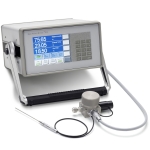
A Dewpoint hygrometer is designed to measure moisture conditions in gases and compressed air. Portable models allow technicians to take readings at different locations, making them useful for spot checks, maintenance inspections, and process evaluation.
When selecting an instrument, users should consider the required measurement range, accuracy, gas compatibility, operating pressure, and environmental conditions. The intended frequency of use is another important factor. Facilities carrying out occasional inspections may have different requirements from those that perform regular moisture measurements throughout the working week.
Additional features can also influence the selection process. Digital displays, data logging, selectable measurement units, and communication interfaces may help technicians review and record readings. Buyers should compare the manufacturer's specifications to identify a model that suits their actual measurement requirements.
Important Features of Modern Moisture Measurement Instruments
Modern portable hygrometers are available with different sensing technologies and configurations. Sensor performance is an important consideration because it influences how moisture conditions are detected and displayed. Users should review technical information about measurement accuracy, response characteristics, calibration, and compatibility with the gas being tested.
Measurement range is another essential specification. Some applications require monitoring very dry gases, while others involve a broader range of moisture conditions. The selected instrument should cover the expected operating conditions without exceeding its stated limitations.
Other useful features may include automatic calibration functions, rechargeable batteries, internal memory, graphical displays, and data transfer options. These functions can make routine measurements more convenient and help maintenance teams organize inspection records. For hazardous environments, the instrument's safety certification must also be appropriate for the intended location.
Shaw Moisture Meters: Exploring Handheld Hygrometers
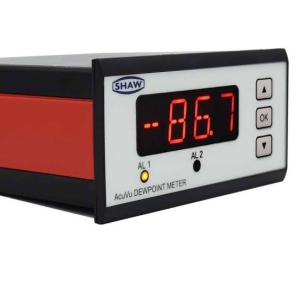
Shaw Moisture Meters develops moisture measurement equipment for industrial and commercial applications. Its product range includes handheld dewpoint hygrometers, portable meters, inline moisture analysers, transmitters, and sensors. These products are designed to support different requirements for monitoring trace moisture in gases and compressed air.
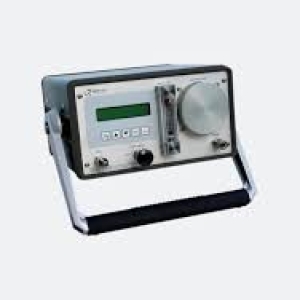
The SDHmini range includes standard, data-logging, and intrinsically safe configurations. According to Shaw's official product information, these handheld instruments use AutoCal and desiccant dry-down technology to support spot-check measurements. Selected models also provide USB and Bluetooth communication features for transferring measurement information to a computer or compatible printer.
The SDHmini-Ex is designed for applications where an intrinsically safe instrument is required. Shaw lists ATEX, IECEx, and UL certifications for this model. Users should always review the relevant product documentation to confirm the exact approvals, operating limits, and suitability for their intended environment.
Applications of Dewpoint Hygrometers Across Industries
Dewpoint measurement is useful in industries where moisture conditions can influence equipment performance or product quality. Compressed air systems are one common application. Technicians can use portable instruments to evaluate air dryness and check whether drying equipment is operating as expected.
Natural gas and specialty gas applications may also require trace moisture monitoring. Measuring dew point can help operators assess gas conditions and investigate whether moisture levels meet the requirements of a particular process. The selected instrument must be compatible with the gas and suitable for the sampling conditions.
Other applications include pharmaceutical manufacturing, semiconductor production, chemical processing, power generation, and food packaging. These industries may use dry gases or controlled atmospheres during specific production stages. Suitable measurement equipment helps operators gather information about moisture conditions at relevant points in the process.
Understanding Portable Spot-Check Measurements
Portable hygrometers are useful because they allow technicians to measure moisture at selected locations instead of depending entirely on permanently installed equipment. Spot checks can help compare conditions across different sections of a system and identify areas that may require further investigation.
The sampling arrangement is important for obtaining meaningful results. Hoses, fittings, and sample lines should be suitable for the gas and moisture range being measured. Blockedword/sentences, contamination, or moisture retained in unsuitable materials can affect readings, especially when measuring very low concentrations.
Technicians should follow the manufacturer's operating instructions and allow measurements to stabilize as recommended. Recording the sampling location, date, operating conditions, and selected measurement units can make results easier to review and compare during future inspections.
Calibration and Maintenance for Reliable Measurements
Calibration helps maintain confidence in moisture measurement results. Instruments should be checked according to the manufacturer's recommendations and the requirements of the application. Calibration documentation can help users understand measurement performance and maintain records for quality procedures.
Routine maintenance may include inspecting sampling connections, checking hoses and fittings, reviewing the instrument's condition, and monitoring unusual changes in readings. Cleaning and servicing should follow the manufacturer's instructions to avoid damaging sensitive components.
Proper storage is equally important. Portable instruments should be protected from unsuitable environmental conditions and handled carefully during transportation. If readings become inconsistent, technicians should review the sampling arrangement, calibration status, and instrument condition before making decisions about the process.
Selecting the Right Hygrometer for Your Requirements
The most suitable instrument depends on the type of gas being measured and the purpose of the measurement. Some facilities require occasional checks during maintenance, while others need frequent readings to monitor drying performance and process conditions.
Users should compare measurement range, accuracy, sensor technology, gas compatibility, battery operation, and calibration support. If the instrument will be used in a potentially hazardous location, its certification and permitted operating conditions must be checked carefully.
Reviewing technical specifications before purchasing can help businesses avoid unsuitable equipment. Consulting the manufacturer or a qualified technical specialist can also provide useful guidance when the application involves unusual gases, pressure conditions, or very low moisture concentrations.
Conclusion
A dewpoint hygrometer is a valuable instrument for monitoring moisture conditions in industrial gases and compressed air systems. It helps technicians perform spot checks, evaluate drying performance, and investigate changes in process conditions. Portable models offer additional flexibility because measurements can be taken at different locations when required.
Selecting suitable equipment involves considering measurement range, accuracy, sensor technology, gas compatibility, and operating conditions. Regular calibration, appropriate sampling practices, and careful maintenance also contribute to dependable readings. By understanding these factors and reviewing product specifications, businesses can choose moisture measurement equipment that supports reliable operations and effective process monitoring.