




Introduction
Understanding the cochlear implant price in Pakistan is an important consideration for individuals and families exploring advanced hearing solutions. Unlike a conventional hearing aid, a cochlear implant is a surgically implanted electronic device designed for people with certain types of severe hearing loss who may receive limited benefit from hearing aids.
The overall cochlear implant cost in Pakistan can depend on the implant system, surgical and hospital expenses, assessment, programming, and rehabilitation. RCHI PAK provides cochlear implant guidance and audiological care as part of its hearing healthcare services.
What Is a Cochlear Implant?
A cochlear implant is different from a traditional hearing aid. Instead of simply amplifying sound, the system uses an external sound processor and an implanted component to deliver electrical signals to the hearing nerve.
Cochlear implants may be considered for people with severe to profound hearing loss when hearing aids do not provide sufficient benefit. Eligibility should be determined through a comprehensive evaluation by qualified hearing and medical professionals.
Cochlear Implant Price in Pakistan
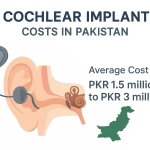
The published RCHI PAK information currently places the cochlear implant price at approximately PKR 1.8 million to PKR 3 million per ear, stating that this figure includes hospitalization, device cost, surgery, follow-up, and speech therapy. Actual costs can vary according to the individual treatment plan, device, hospital, and services required.
Because prices and treatment arrangements can change, prospective patients should request a current, itemized estimate before making a decision.
What Affects Cochlear Implant Cost in Pakistan?
The total cochlear implant cost in Pakistan is influenced by several components rather than the device alone.
Important factors can include:
- Implant brand and model
- External sound processor
- Surgical and hospital expenses
- Pre-surgical hearing assessments
- Medical evaluations
- Device programming and activation
- Speech and auditory rehabilitation
- Follow-up appointments
- Future processor-related requirements
Understanding these components can make it easier to compare treatment estimates and identify what is included in a quoted price.
Who May Benefit From a Cochlear Implant?
Cochlear implants are generally considered for people with significant hearing loss who receive insufficient benefit from hearing aids. Assessment may consider hearing thresholds, speech understanding, medical factors, and previous hearing-aid experience.
Children with significant hearing loss may also be evaluated for cochlear implantation. The timing of intervention can be particularly important for children because hearing and language development are closely connected, but eligibility and timing should be determined by the child's clinical team.
Why a Hearing Assessment Comes First
A cochlear implant is not appropriate for every person with hearing loss. Comprehensive assessment helps determine whether an individual may be a suitable candidate and what additional evaluations may be required.
The assessment process can include hearing tests, speech perception testing, medical evaluation, and other investigations depending on the patient's circumstances. RCHI PAK describes comprehensive candidate assessment as part of its cochlear implant process.
Understanding the Cochlear Implant Process
Cochlear implantation involves several stages rather than a single appointment. The process may begin with hearing assessment and candidacy evaluation before moving toward medical clearance and device selection.
After surgery, the external sound processor needs to be activated and programmed. Rehabilitation and speech or auditory therapy can then form an important part of the longer-term process. RCHI PAK notes that its cochlear implant pathway includes activation, mapping, speech therapy, and periodic processor-related care.
Rehabilitation Is Part of the Journey
Receiving the implant is not the end of treatment. The brain needs time and structured support to interpret the new electrical sound signals.
Depending on age and individual needs, rehabilitation may involve auditory training, speech therapy, device programming, and regular follow-up. The rehabilitation plan should be personalized according to the patient's progress.
How to Compare Cochlear Implant Prices
When researching cochlear implant price in Pakistan, avoid comparing numbers without checking what each quotation includes.
Ask the provider:
- Which implant system and processor are included?
- Does the estimate include surgery and hospitalization?
- Are pre-surgical assessments included?
- What programming and activation services are provided?
- Is rehabilitation included?
- What follow-up care is available?
- What costs may arise later for accessories or processor-related needs?
A detailed comparison can provide a clearer picture of the overall treatment expense.
Financial Assistance and Support
The cost of cochlear implantation can be significant for many families. In Pakistan, financial assistance programs have also supported eligible children. Pakistan Bait-ul-Mal states that deserving patients undergoing cochlear implantation can apply for assistance, subject to its medical-board assessment and approval process.
Families considering this route should verify the current eligibility criteria, application process, and available funding directly with the relevant program.
Why Consider RCHI PAK?
RCHI PAK provides hearing healthcare services that include hearing assessments, cochlear implant consultation, and related audiological support. Its published information states that it has provided hearing care in Pakistan since 1992 and offers cochlear implant guidance as part of its services.
For anyone researching the cochlear implant price in Pakistan, professional assessment can help clarify candidacy, treatment requirements, device options, and the likely components of the overall cost.
Frequently Asked Questions
1. What is the cochlear implant price in Pakistan?
RCHI PAK currently lists an approximate range of PKR 1.8 million to PKR 3 million per ear, including stated treatment components such as the device, hospitalization, surgery, follow-up, and speech therapy. Actual costs may vary.
2. What affects cochlear implant cost in Pakistan?
Device selection, surgery, hospital expenses, assessments, programming, rehabilitation, and follow-up care can all influence the total cost.
3. Is a cochlear implant suitable for everyone with hearing loss?
No. Candidacy depends on factors such as the degree and type of hearing loss, speech understanding, hearing-aid benefit, and medical considerations. A professional evaluation is required.
4. Is financial assistance available for cochlear implants?
Some assistance programs are available for eligible patients. Pakistan Bait-ul-Mal has a cochlear implant assistance process for deserving patients, subject to assessment and approval.
Conclusion
The cochlear implant price in Pakistan depends on more than the implant device itself. Surgery, hospital care, assessment, programming, rehabilitation, and ongoing support can all contribute to the overall cochlear implant cost in Pakistan.
Anyone considering implantation should begin with a professional evaluation rather than choosing a device based solely on price. RCHI PAK can be considered for cochlear implant guidance and hearing-care support, helping individuals and families understand their options and the treatment process before taking the next step.