

Pedal assist is one of the best features of an electric bike, but using the highest assist level all the time is rarely the best way to ride.
If you want better battery range, smoother acceleration, less drivetrain wear, and a more natural riding experience, the key is to combine your own pedaling, the bike's mechanical gears, and the appropriate pedal-assist level.
Here are some practical habits I've found useful for getting more out of an eBike.
1. Don't Automatically Use the Highest Assist Level
It's tempting to sBlockedword/sentence straight to Level 5 because the bike feels fast and effortless. The downside is that higher assistance usually means considerably higher battery consumption.
For normal riding, I find the lower and middle settings much more useful:
- Level 1: starting, easy cruising, and maximizing range
- Level 2–3: everyday commuting and moderate hills
- Level 4–5: steep hills, strong headwinds, or short periods when extra assistance is needed
On a long ride, staying around Level 2 or 3 whenever conditions allow can make a noticeable difference to remaining battery capacity.
Maximum assist is best treated as extra power you use when you actually need it.
2. Use Your Mechanical Gears Too
A common mistake among new eBike riders is adjusting pedal assist while largely ignoring the bicycle's gears.
The motor and gears should work together.
When approaching a hill, shift into a lower mechanical gear so you can continue pedaling comfortably. Don't simply leave the bike in a high gear and expect the motor to do all the work.
On flat roads, shift into a higher gear as your speed increases. If your pedals are spinning rapidly with almost no resistance, sometimes called "ghost pedaling," you're probably in too low a gear.
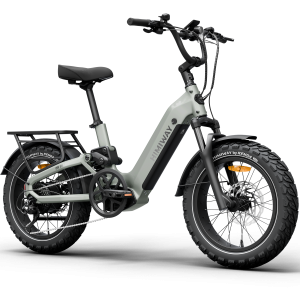
This matters even on relatively powerful bikes. For example, a Himiway D5 2.0 may have plenty of assistance available, but using an appropriate gear on a climb still produces a more controlled riding experience than simply demanding maximum power from the motor.
3. Maintain a Smooth Pedaling Cadence
Efficient eBike riding isn't about pushing the pedals as hard as possible. A smooth and comfortable cadence is generally better.
Try to avoid alternating between very hard pedaling and long periods of barely moving your legs.
Instead, maintain a steady rhythm.
This makes the bike feel more predictable and can be particularly useful when riding through rolling terrain where the graBlockedword/sentencent changes frequently.
If pedaling suddenly becomes extremely difficult, downshift. If your legs are spinning too quickly without meaningful resistance, shift up.
4. Understand Cadence and Torque Sensors
How you should pedal also depends on the type of pedal-assist sensor your eBike uses.
A cadence sensor primarily detects whether and how you are pedaling. Once pedaling is detected, the system provides assistance according to the selected PAS setting. These systems can feel relatively strong and consistent.
A torque sensor measures how much force you're applying to the pedals. Push harder and the motor generally provides more assistance; pedal gently and assistance decreases.
Torque-sensing bikes often feel more like traditional bicycles because the motor responds proportionally to your effort.
Some Himiway models are designed around more responsive pedal-assist experiences. On bikes such as the Himiway A7 or A7 Pro, for example, riders who prefer a natural-feeling ride can benefit from learning how the bike responds to changes in pedal pressure rather than constantly changing the assist setting.
The important point is to understand how your particular bike responds instead of assuming every PAS system behaves the same way.
5. Start in a Lower Assist Setting
Starting every ride in maximum assistance can waste energy and sometimes make acceleration feel unnecessarily aggressive.
I prefer starting at Level 1 or another low setting and increasing assistance after the bike is moving.
Put some pressure on the pedals yourself, allow the motor to join smoothly, and then select additional assistance if necessary.
This is especially useful in parking lots, around pedestrians, on shared paths, or anywhere precise low-speed control matters.
For shorter riders or people who value easier low-speed handling, a compact model such as the Himiway D5 2.0 20" can also make starts and stops feel more manageable. Regardless of wheel size, though, starting gently is a good habit.
6. Downshift Before a Steep Hill
Don't wait until you're halfway up a steep hill and almost stopped before changing gears.
Look ahead.
As you approach the climb:
- Build a little momentum.
- Shift into an easier mechanical gear.
- Maintain a steady cadence.
- Increase pedal assistance if needed.
- Keep pedaling rather than asking the motor to handle the entire climb.
The goal is to avoid putting the motor under a very heavy load at extremely low speed.
This approach works particularly well with heavier fat-tire eBikes such as the Himiway D5, D5 Pro, D5 2.0, D7, or D7 Pro. These bikes may provide substantial motor assistance, but good shifting technique still matters.
7. Reduce Assist on Flat Roads
Flat roads are where you can save a lot of battery.
Once you're cruising comfortably, try dropping the PAS setting by one level. You may discover that you don't actually need as much assistance as you thought.
For example, if Level 3 gets you up to a comfortable cruising speed, try Level 2 after you've built momentum.
You can always increase it again when you encounter a hill or headwind.
This simple habit is especially useful when you're trying to extend your range on a long recreational ride.
8. Don't Use the Throttle as Your Default Riding Mode
If your eBike has a throttle, it's certainly convenient. But constantly using it instead of pedaling can consume battery more quickly.
I think of the throttle as a useful supplementary feature rather than the primary way to ride.
It can be convenient for a brief start, getting moving at an intersection, or situations where you temporarily need additional assistance. Once you're moving comfortably, pedal assist is usually the better option for longer rides.
Of course, throttle availability and operation depend on the bike's configuration and local eBike regulations.
9. Anticipate Stops and Terrain
Efficient riding involves looking ahead.
If there's a red light 100 feet in front of you, continuing at high assist and then braking hard doesn't accomplish much except use extra energy.
Instead, reduce your effort and assistance as you approach the stop.
The same applies to hills. Downshift before the climb instead of reacting after your speed has already dropped dramatically.
Good eBike riders gradually begin to adjust gears and assistance almost automatically according to the road ahead.
10. Keep Your Tires Properly Inflated
Pedal-assist efficiency isn't only about electronics.
Low tire pressure increases rolling resistance, which means both you and the motor have to work harder.
Check your tire pressure regularly and stay within the tire or bike manufacturer's recommended range. Don't automatically inflate every tire to the maximum pressure printed on its sidewall; appropriate pressure depends on the tire, rider weight, terrain, and desired comfort.
This is particularly noticeable on fat-tire models. Lower pressure can improve comfort and traction on loose surfaces, while excessively low pressure on pavement can increase rolling resistance.
Finding the right balance matters.
11. Let Your Legs Do Some of the Work
One of the advantages of an eBike is that you can choose how much effort you want to contribute.
That doesn't mean the motor should do everything.
Even moderate rider input reduces the amount of assistance required from the electrical system. Over a long ride, that can help conserve battery capacity while still making hills and longer distances much easier than they would be on a conventional bicycle.
This is one reason I prefer thinking of PAS as an amplifier:
You pedal, and the motor adds to your effort.
That mindset tends to produce a smoother and more efficient riding style.
A Simple PAS Strategy
For everyday riding, my basic approach is:
Starting: Low gear + PAS 1
Flat cruising: Comfortable gear + PAS 1–3
Moderate hill: Lower gear + PAS 2–4
Steep hill: Low gear + higher PAS as needed
Downhill: Low or no assistance when appropriate
Strong headwind: Temporarily increase PAS
Approaching a stop: Reduce assistance and downshift for the next start
The exact settings will vary because different eBikes use different motors, controllers, gearing, sensors, and PAS programming.
Summary
Using pedal assist efficiently isn't about staying in the lowest setting all day. It's about using the right amount of assistance at the right time.
Use lower assistance when cruising, shift your mechanical gears according to the terrain, maintain a smooth cadence, and reserve maximum assistance for situations where it provides a real benefit.
Whether you're riding a commuter-oriented Himiway A7, a compact D5 2.0 20", a fat-tire D5 series bike, or another eBike entirely, these habits can make your ride smoother and help you get more useful distance from the battery.
After a while, you stop thinking much about PAS levels. You simply see a hill, downshift and increase assistance; reach flat pavement, shift up and reduce assistance.
That's when an eBike starts t

o feel less like a bicycle with a motor attached and more like one integrated system working together with you.