
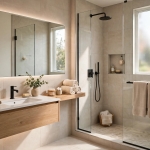

A small bathroom can still feel comfortable, stylish, and practical with the right planning. The best Bathroom Remodeling Ideas focus on using available space wisely, improving storage, choosing suitable fixtures, and making the room feel more open. Whether you are updating a guest bathroom, powder room, or master bathroom, even a few smart changes can make a noticeable difference.
1. Choose a Light Color Scheme
One of the easiest ways to make a small bathroom feel larger is to use light colors. White, soft gray, beige, cream, and other neutral shades can reflect light and create an open feeling.
Light-colored walls and tiles can make the room appear more spacious. You can add contrast through towels, mirrors, hardware, or small decorative elements without making the bathroom feel crowded.
2. Install a Large Mirror
A mirror is an important feature in any bathroom, especially when space is limited. A large mirror can reflect light and visually expand the room.
Instead of using several small decorative mirrors, consider installing one large mirror above the vanity. For a more modern look, you can also choose a mirror with built-in lighting.
3. Use a Floating Vanity
Traditional bathroom cabinets can take up valuable floor space. A floating vanity is mounted against the wall, leaving some of the floor visible underneath.
This design can make a small bathroom look less crowded while still providing useful storage. The open floor area also makes cleaning easier.
Choose a vanity that fits the bathroom properly rather than selecting the largest option available. A compact vanity with drawers can provide plenty of storage without taking over the room.
4. Add Wall-Mounted Storage
When floor space is limited, look upward. Walls can provide valuable storage opportunities without reducing walking space.
Floating shelves, recessed cabinets, wall-mounted organizers, and narrow storage units can be useful for keeping toiletries, towels, and bathroom accessories organized.
Open shelves can also add a decorative touch when you display neatly folded towels or a few simple accessories.
5. Consider a Walk-In Shower
A bathtub can take up a significant amount of space. If you rarely use a bathtub, replacing it with a compact walk-in shower may create more usable space.
A glass shower enclosure can make the bathroom feel more open because it does not visually divide the room. Frameless or minimally framed glass can provide a clean and modern appearance.
For safety, choose slip-resistant flooring and consider adding a built-in shower niche for toiletries.
6. Use Large-Format Tiles
Large tiles can be a practical choice for small bathrooms. Because they have fewer grout lines, they can create a cleaner and less busy appearance.
Large-format wall or floor tiles can make surfaces appear more continuous. Neutral colors and simple patterns can further enhance the spacious look.
However, the tile size should be selected according to the room's dimensions and layout. A professional can help determine which tile format works best for the space.
7. Install a Pocket Door
A traditional hinged bathroom door requires space to swing open and closed. In a small bathroom, that space could otherwise be used for storage or movement.
A pocket door slides into the wall instead of opening into the bathroom. This can free up valuable floor space and make the layout easier to use.
If a pocket door is not practical, consider changing the door swing or using another space-saving door design.
8. Create a Recessed Shower Niche
Bathroom products can quickly make a small shower look cluttered. Shampoo bottles, soaps, razors, and other items need a convenient storage location.
A recessed shower niche is built into the wall and provides storage without taking up additional floor or shower space.
You can coordinate the niche with the surrounding tile to create a clean and finished appearance.
9. Choose Compact Fixtures
Large fixtures can overwhelm a small bathroom. Compact toilets, narrow vanities, smaller sinks, and space-saving shower fixtures can provide the functionality you need while leaving more room to move.
Before purchasing any fixture, measure the available area carefully. Consider door openings, plumbing locations, cabinets, and walking paths.
A fixture that looks compact in a showroom may take up more space than expected once installed.
10. Improve Bathroom Lighting
Good lighting can make a small bathroom feel brighter and more welcoming. A single ceiling fixture may not provide enough light for the entire room.
Consider combining general lighting with task lighting around the vanity. Wall sconces or properly positioned fixtures can reduce shadows around the mirror.
If possible, make use of natural light through windows or skylights. Frosted glass can provide privacy while still allowing daylight into the room.
11. Use Vertical Space
Vertical space is often overlooked during bathroom remodeling. Instead of extending cabinets outward, consider taller storage solutions.
A narrow linen cabinet, tall shelving unit, or wall-mounted cabinet can provide additional storage while using a relatively small footprint.
Keep frequently used items within easy reach and place less frequently used products on higher shelves.
12. Keep the Design Simple
Too many patterns, colors, and accessories can make a small bathroom feel visually crowded.
A simple design with a consistent color palette can create a more organized appearance. You can introduce personality through a feature wall, decorative mirror, attractive hardware, or colorful accessories.
The goal is not to remove all character from the room but to avoid unnecessary visual clutter.
13. Use Multi-Functional Features
When space is limited, every feature should ideally serve a purpose. Look for bathroom products that combine functionality with storage or other useful features.
For example, a vanity can provide both a sink and cabinet storage. A mirrored medicine cabinet can combine a mirror with hidden storage. A shower niche can provide convenient product storage without taking up floor space.
These small improvements can make the bathroom easier to use every day.
14. Plan Storage Before Remodeling
Storage should be considered early in the remodeling process rather than added as an afterthought.
Make a list of everything you normally keep in the bathroom, including towels, toiletries, cleaning products, hair tools, and personal-care items. Then determine where each category will be stored.
This approach can help prevent countertop clutter and make the finished bathroom more functional.
15. Make Ventilation a Priority
A beautiful bathroom still needs proper ventilation. Bathrooms produce significant moisture from showers and baths, and excess humidity can contribute to unpleasant odors, moisture damage, and mold growth.
A properly sized exhaust fan can help remove humid air. Make sure the ventilation system is installed correctly and vents to the appropriate exterior location.
If you are remodeling an older bathroom, it is a good opportunity to evaluate the existing ventilation system.
16. Think About Accessibility
Even if accessibility is not currently a concern, planning for easier use can make a bathroom more comfortable over time.
Features such as a curbless shower, handheld showerhead, wider entry, comfortable-height toilet, and strategically placed grab bars can improve usability.
Some accessibility features can also be incorporated into a modern bathroom design without making the room look institutional.
17. Choose Durable Materials
Bathroom surfaces are exposed to water, humidity, cleaning products, and daily use. Choosing durable materials can help the remodeled bathroom maintain its appearance for longer.
Pay attention to flooring, countertops, cabinets, fixtures, grout, and shower materials. Water-resistant and easy-to-clean options are often practical choices for busy households.
The cheapest material is not always the most economical choice over the long term. Consider both the initial cost and expected durability.
18. Work With the Existing Layout When Possible
Changing the location of plumbing fixtures can increase the complexity and cost of a bathroom remodel. If the existing layout works reasonably well, keeping major plumbing locations in place may help control the project budget.
However, an inefficient layout should not be kept simply to avoid changes. If moving a fixture significantly improves functionality, the additional investment may be worthwhile.
A professional remodeling contractor can help compare different layout options before construction begins.
19. Add Small Design Details
Small bathrooms do not need to be boring. Simple details can add personality without taking up valuable space.
Consider modern cabinet hardware, a stylish faucet, a framed mirror, decorative wall tile, contemporary lighting, or coordinated towels and accessories.
These details can create a finished appearance while keeping the overall design clean.
20. Set a Realistic Remodeling Budget
Before starting the project, establish a realistic budget. Include the cost of materials, labor, fixtures, permits where applicable, demolition, disposal, and unexpected repairs.
It is also wise to keep some extra funds available for unforeseen issues. Once walls or flooring are opened, older plumbing, moisture damage, or other hidden problems may sometimes be discovered.
A clear budget allows you to prioritize the features that matter most and avoid unnecessary expenses.
Final Thoughts
A small bathroom can become much more functional and comfortable with thoughtful planning. Light colors, large mirrors, floating vanities, smart storage, compact fixtures, better lighting, and space-saving shower designs can all help make the most of a limited area.
The key is to balance appearance with everyday functionality. Before beginning your project, consider the bathroom's current problems, your storage needs, preferred design style, budget, and long-term requirements. With the right approach, even a compact bathroom can feel organized, modern, and comfortable.