

Both copper and aluminum have strong ability to form alloys, and can form alloys with various properties. Among them, the copper alloy with zinc as the main alloying element is called brass. zinc in brass
The higher the content, the higher the strength and slightly lower plasticity. Adding 1% tin to brass can significantly improve the brass' ability to resist seawater and marine atmospheric corrosion, so it is called "Navy Brass". Tin can improve the machinability of brass.
Lead brass is what we usually call easy-to-cut national standard copper. The main purpose of adding lead is to improve machinability and wear resistance. Lead has little effect on the strength of brass. Carved copper is also a type of leaded brass. Most brass has good color, workability, ductility, and is easy to be electroplated or painted.
The alloy of copper and tin is called bronze, named for its blue color. Bronze generally has good corrosion resistance, wear resistance, castability and excellent mechanical properties. It can be used to manufacture precision bearings, high-pressure bearings, and mechanical parts resistant to seawater corrosion on ships.
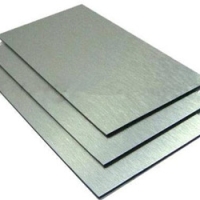
If an appropriate amount of other elements are added to aluminum to prepare aluminum alloys, such as hard aluminum, super hard aluminum, anti-rust aluminum, cast melting point of aluminum, etc., it has the characteristics of high strength, good plasticity, high specific strength, and light weight. It can be combined with high-quality alloys. Comparable to steel, it becomes an excellent lightweight structural material, with
Known as the "flying metal", aluminum accounts for more than 50% of the aircraft structure. Motor vehicles use aluminum alloy instead of some steel to make components, which can reduce their weight by 20%-75%, reduce fuel consumption by 8%, and extend the life of mechanical parts by 15%. The use of aluminum alloy in the vehicle and shipbuilding industry has developed rapidly. Aluminum alloys are also widely used in the construction industry and are often used as doors, windows and structural materials for houses.
Compared with aluminum alloy, copper alloy has the following characteristics:
1) The mechanical properties of copper alloy are high, and its absolute value exceeds that of aluminum alloy.
2) Copper alloy has high density and high melting point; aluminum alloy has low density and low melting point.
3) Copper alloys have a small coefficient of friction and a small coefficient of linear expansion, while high wear resistance, fatigue limit and thermal conductivity; aluminum alloys also have high thermal conductivity, but poor wear resistance.
4) Copper alloys have better chemical stability in the atmosphere, and aluminum alloys are easier to oxidize, so aluminum alloys are often anodized on the surface when they are used.
5) Copper resources are relatively scarce, and the price of copper alloys is relatively high; aluminum resources are relatively abundant, so the price of aluminum alloys is relatively low.
Therefore, in application, it is required to choose between copper and aluminum, then it is required to have higher strength, high melting point, good wear resistance, and good chemical stability, and copper alloy is selected; weight is required
Lightweight, aluminum alloy is selected when the price is low.
Although many properties of copper are higher than that of aluminum, aluminum and aluminum alloys are used more and more widely with the advancement of science and technology due to the light weight of aluminum, abundant reserves of aluminum resources, and low prices.
The higher the content, the higher the strength and slightly lower plasticity. Adding 1% tin to brass can significantly improve the brass' ability to resist seawater and marine atmospheric corrosion, so it is called "Navy Brass". Tin can improve the machinability of brass.
Lead brass is what we usually call easy-to-cut national standard copper. The main purpose of adding lead is to improve machinability and wear resistance. Lead has little effect on the strength of brass. Carved copper is also a type of leaded brass. Most brass has good color, workability, ductility, and is easy to be electroplated or painted.
The alloy of copper and tin is called bronze, named for its blue color. Bronze generally has good corrosion resistance, wear resistance, castability and excellent mechanical properties. It can be used to manufacture precision bearings, high-pressure bearings, and mechanical parts resistant to seawater corrosion on ships.
If an appropriate amount of other elements are added to aluminum to prepare aluminum alloys, such as hard aluminum, super hard aluminum, anti-rust aluminum, cast melting point of aluminum, etc., it has the characteristics of high strength, good plasticity, high specific strength, and light weight. It can be combined with high-quality alloys. Comparable to steel, it becomes an excellent lightweight structural material, with
Known as the "flying metal", aluminum accounts for more than 50% of the aircraft structure. Motor vehicles use aluminum alloy instead of some steel to make components, which can reduce their weight by 20%-75%, reduce fuel consumption by 8%, and extend the life of mechanical parts by 15%. The use of aluminum alloy in the vehicle and shipbuilding industry has developed rapidly. Aluminum alloys are also widely used in the construction industry and are often used as doors, windows and structural materials for houses.
Compared with aluminum alloy, copper alloy has the following characteristics:
1) The mechanical properties of copper alloy are high, and its absolute value exceeds that of aluminum alloy.
2) Copper alloy has high density and high melting point; aluminum alloy has low density and low melting point.
3) Copper alloys have a small coefficient of friction and a small coefficient of linear expansion, while high wear resistance, fatigue limit and thermal conductivity; aluminum alloys also have high thermal conductivity, but poor wear resistance.
4) Copper alloys have better chemical stability in the atmosphere, and aluminum alloys are easier to oxidize, so aluminum alloys are often anodized on the surface when they are used.
5) Copper resources are relatively scarce, and the price of copper alloys is relatively high; aluminum resources are relatively abundant, so the price of aluminum alloys is relatively low.
Therefore, in application, it is required to choose between copper and aluminum, then it is required to have higher strength, high melting point, good wear resistance, and good chemical stability, and copper alloy is selected; weight is required
Lightweight, aluminum alloy is selected when the price is low.
Although many properties of copper are higher than that of aluminum, aluminum and aluminum alloys are used more and more widely with the advancement of science and technology due to the light weight of aluminum, abundant reserves of aluminum resources, and low prices.