







Among the various proposals for bolstering Security is raising the retirement age at which Americans can claim full benefits. One lawmaker instead wants to lower it.
Rep. Haley Stevens, a Michigan Democrat, on Thursday introduced the Blue Collar Social Security Fairness Act, which would reduce the retirement age for workers in construction, nursing, manufacturing and other physically demanding jobs to age 60. That would allow them to claim full Social Security benefits seven years earlier than they can under the law today.
Currently, Americans born after 1960 may claim full Social Security benefits at age 67. Workers may start collecting as soon as they turn 62, but with a 30% reduction in benefits (the benefits cut gradually decreases each year between ages 63 and 66).
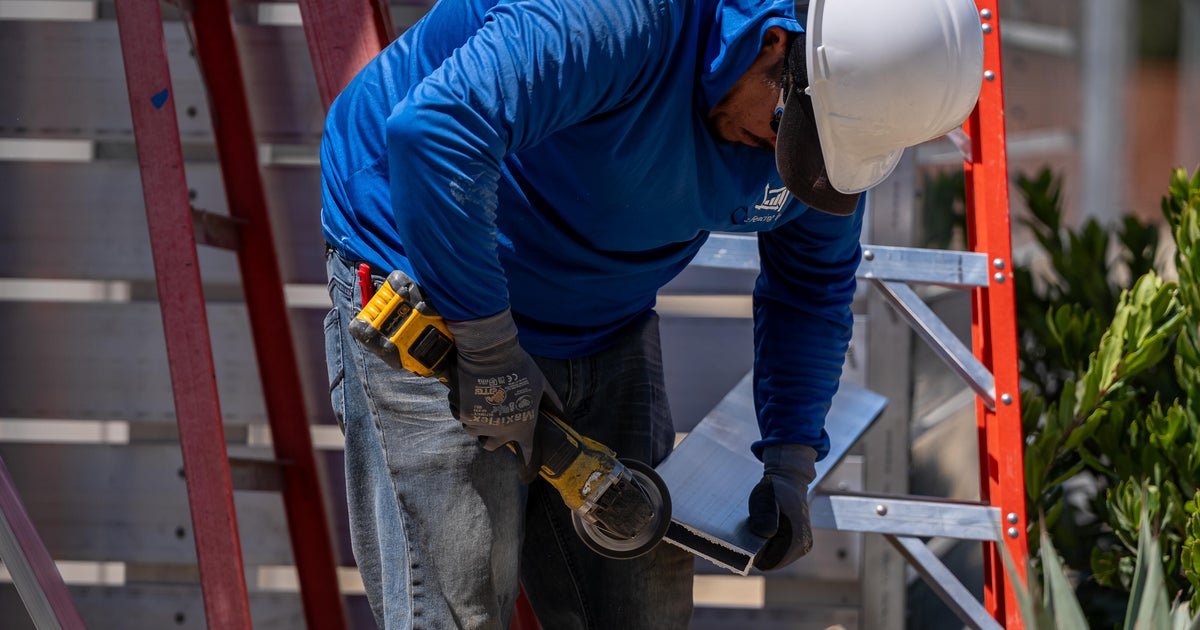
Stevens has said that lowering the retirement age for blue-collar workers is necessary to help those who may struggle working into their 60s, given that such jobs are often physically demanding.
"Michiganders who work with their hands shouldn't be forced to wait until their bodies give out to retire," she said in a statement on Thursday in unveiling the legislation in Washington, D.C. In August, Stevens lost to Abdul El-Sayed in the Democratic Senate primary.
The bill's introduction comes amid wider public debate about how to fund Social Security as the program's outlays continue to outpace its revenue. The most recent Social Security trustees report projected that a key trust fund that pays benefits to retirees and survivors of deceased workers would become insolvent by the end of 2032, earlier than previously forecast.
That could trigger a cut of more than 20% in Social Security recipients' benefits, according to the trustees.
The average retired worker received $2,071 a month in Social Security benefits as of January, according to the Social Security Administration.
Stevens' bill would create a system that awards blue-collar workers a set number of points based on the number of years they worked in a physically demanding job and their age at the time. Workers would be awarded one point for each year worked between the ages of 35 and 44, for example.
To qualify for retirement at 60, workers would need to earn at least 15 points or have worked at least 20 years in certain jobs, such as manufacturing or roofing.
According to the bill, the commissioner of the Social Security Administration would compile a list of qualifying professions, which the agency would be required to update every three years.
A job would have to "impose on an individual substantial physical demands that may be reasonably expected to diminish the ability of the individual to perform such occupation, or other occupations imposing substantial physical demands, at an advanced age," according to the bill.
Experts note there are other ways to shore up Social Security. Those include eliminating the cap on the amount of individual income subject to the Social Security tax, currently $184,500, and raising the payroll tax.
In July, Sens. Elizabeth Warren, a Democrat from Massachusetts, and Bernie Moreno, a Republican from Ohio, called for lifting the payroll tax cap, which they say would create a fairer system in which high-income earners pay the same share of their income into the program as low- and middle-class workers.
A 2025 poll of more than 4,000 Americans from the Bipartisan Policy Center found that 65% of Democrats and 62% of Republicans supported lifting or removing the cap. A majority of households earning more than $200,000 a year also backed the idea, the poll found.
More from CBS News
What today's gold prices could mean for your retirement savings Many Americans are relying on multiple forms of credit to cover expenses. When is it a warning sign?
 What could happen to your family's finances without life insurance?
 How to deal with debt when you've already cut back everywhere

Go deeper with The Free Press
Roy Cooper, Sherrod Brown, and the Road to Democratic Victory The Black Voters Who Could Decide the Country’s Biggest Democratic Primary