



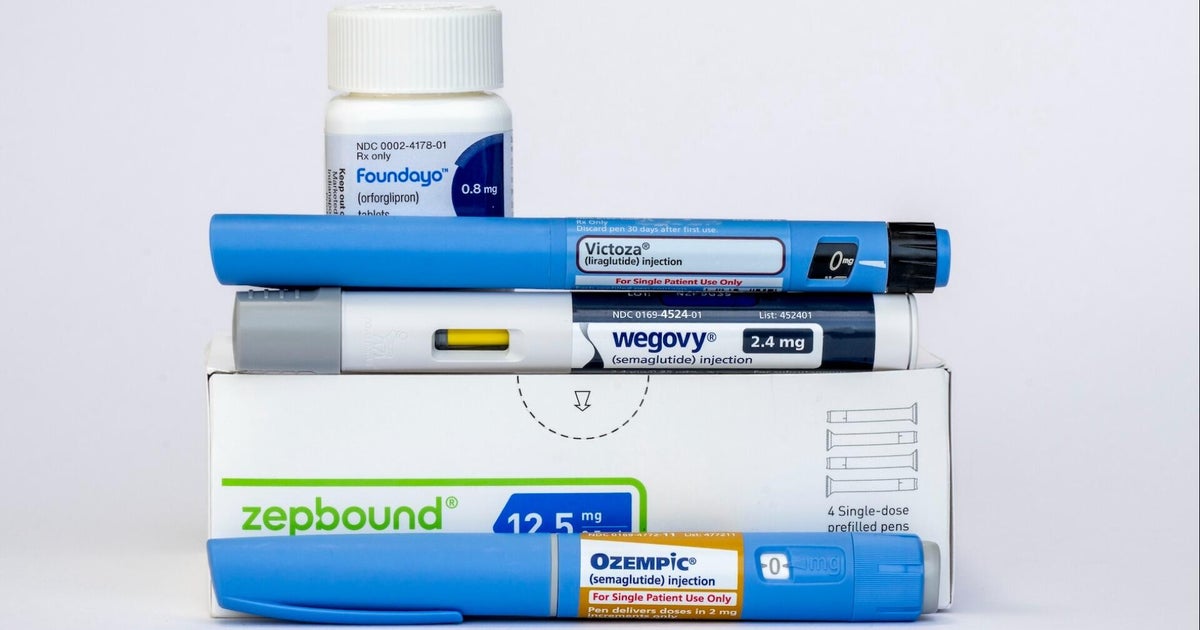


The Food and Drug Administration has warned a major compounding pharmacy that it violated federal law by making copies of blockbuster weight-loss drugs in "inordinate amounts."
The letter to Empower Pharmacy marks the first time the FDA has waded into a fierce debate about when a pharmacy's legitimate work of customizing a medication crosses the line into mass-copying of patented FDA-approved drugs.
The FDA's warning, dated Sept. 18 but posted online Tuesday, gives Houston-based Empower an opportunity to comply with the FDA's requirements. In a statement, Empower said it has "already remediated many of the issues outlined in the Warning Letter," adding that it will "continue to work cooperatively with the agency to ensure patient access to quality compounded drug products."
Empower openly advertises two of the most popular medications on its website, which are available to healthcare providers and not directly to consumers.
Here's what to know:
What are compounding pharmacies, and how are they able to make cheaper versions of blockbuster weight-loss drugs?Compounding pharmacies have traditionally custom-tailored medications for individual patients, such as making a liquid solution for someone who can't swallow a pill. Regulators inspect their facilities but don't review the medications they make. Because of this, the FDA says it can't offer the same safety assurances as drugs that go through its rigorous approval process.
With the frenzy ignited by GLP-1 weight-loss drugs, compounding pharmacies have found a new opportunity. FDA regulations allow them to make copies of brand-name drugs when the agency declares a shortage. So when the FDA determined that Novo Nordisk and Eli Lilly couldn't keep up with demand for their appetite-suppressing drugs in 2022, many compounders jumped at the chance to make their own versions, drawing millions of patients with much cheaper prices.
How is it that compounding pharmacies can still make versions of these drugs?This is where things get contentious. The FDA declared an end to the shortage in 2025. Federally licensed compounding pharmacies — which are permitted to make larger quantities of medications and have to comply with more exacting standards — have largely stopped making copies of Eli Lilly's tirzepatide (marketed as Zepbound and Mounjaro) and Novo's semaglutide (sold as Wegovy and Ozempic). But smaller, state-licensed pharmacies have continued to make versions of these drugs, citing an FDA policy that allows them to tweak an approved drug — altering the dosage, or combining it with a vitamin — when a licensed medical professional says the change will make a "significant difference" for an individual patient.
Eli Lilly and Novo have loudly objected to this practice in public statements and lawsuits. Eli Lilly is currently suing Empower, claiming the pharmacy's "practice of marketing (sham) 'personalized' products is deceptive, because in fact, Empower is mass-manufacturing standardized knockoffs of Lilly's commercially available and FDA-approved medicines."
Empower denies this in court documents, and the litigation is ongoing.
What makes this enforcement action from the FDA significant?This marks the first time the FDA has stepped into the debate over where the narrow carve-out for personalized drugs ends and mass production begins.
After an inspection in November 2025, the FDA determined that Empower was essentially using a pretext for copying the FDA-approved drugs on a large scale, according to its warning letter.
The FDA cited three main pieces of evidence:
Orders that didn't include a prescriber saying Empower's version would make a "significant difference" from the FDA-approved version.Other orders where the prescriber's rationale "appear[s] to be repeated verbatim."The sheer volume Empower was making (exact amounts were redacted).Scott Brunner, CEO of Alliance for Pharmacy Compounding, said that the FDA's warning wasn't about the volume alone, but the lack of documentation to prove that Empower was appropriately making the drug for individual patient needs.
Will the FDA action affect whether compounded GLP-1 drugs are available to consumers?"The FDA is possibly marking a line in the sand," said Darshan Kulkarni, founding partner of the Kulkarni Law Firm and an expert in healthcare and pharmacy law. For now, though, the FDA's warning shot is more likely to prompt compounding pharmacies to reframe how they differentiate their weight-loss products than to immediately stop making them, he said.
But with the FDA taking a stance on the limits of compounded weight-loss drugs, he said, "That avenue is definitely getting narrower."