



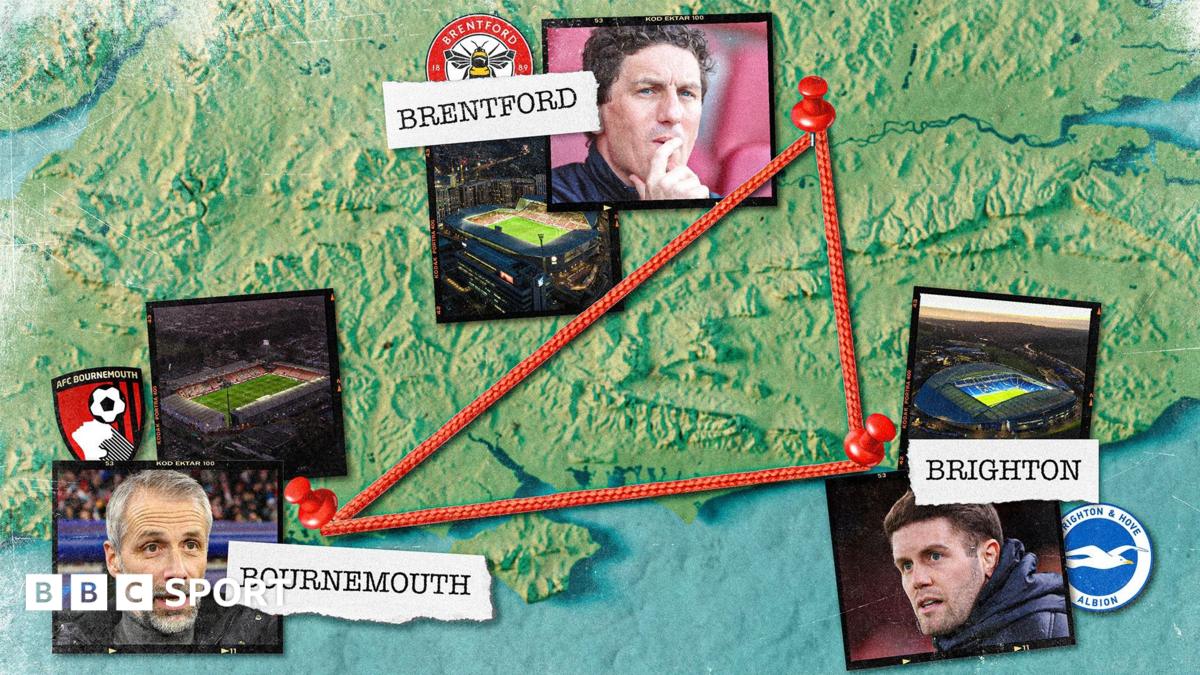




In fact, the Opta data suggests Brighton are the main reason the theory has gained such traction.
Since Fabian Hurzeler took charge, only Kenny Dalglish's Blackburn have recorded a better points-per-game return against the traditional Big Six among managers of non-Big-Six clubs with at least 10 matches.
The popularity of the Bermuda Triangle idea may say as much about perception as results.
When it comes to recruitment and spending, Bournemouth, Brighton and Brentford operate in a different world to the Premier League's biggest clubs. They cannot simply outspend Arsenal, Liverpool or Manchester City.
That makes their victories more memorable. Upsets also tend to linger longer in the memory because they fit a familiar story: well-run clubs outperforming opponents with significantly greater resources.
The meme is not entirely without foundation, although the evidence is considerably stronger for Brighton and Bournemouth than it is for Brentford.
Brentford's overall record is weaker, although a series of eye-catching victories under Thomas Frank and now Keith Andrews have helped cement their reputation as a difficult opponent for elite clubs. And the start to this season has helped: their Chelsea success added to by an opening day 3-0 rout of Spurs.