




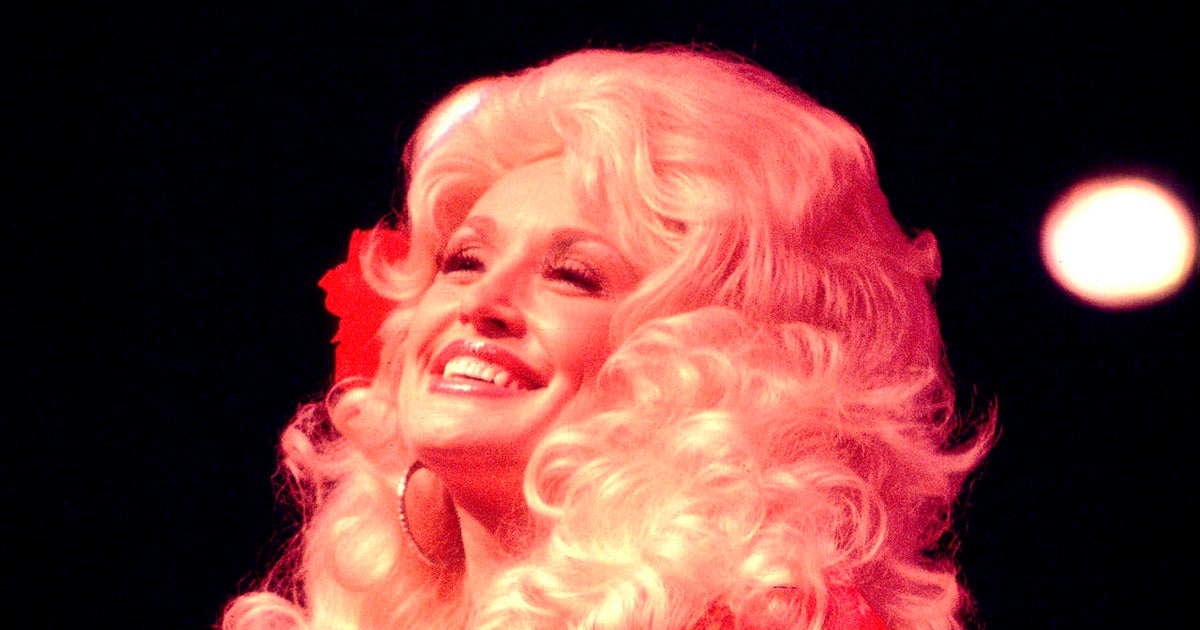

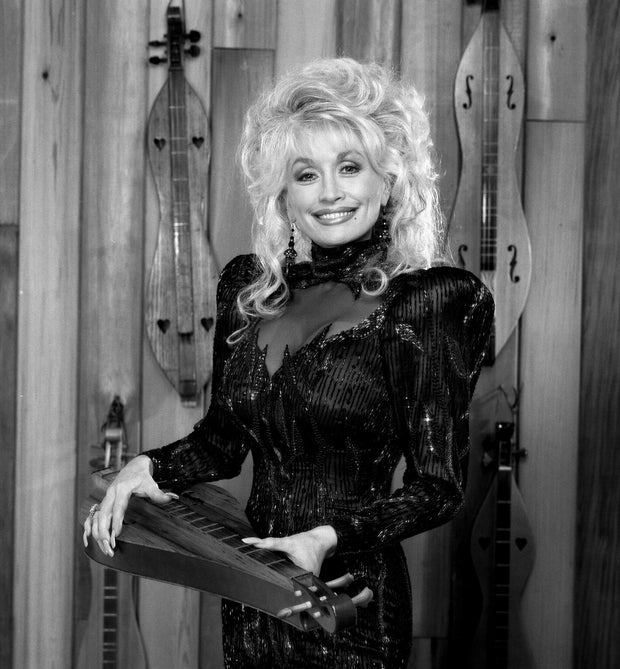
 A publicity photo of Dolly Parton for the 1988 CMA Awards. | CBS via Getty Images
A look back at the esteemed personalities who left us this year, who touched us with their innovation, creativity and humanity.
By CBSNews.com senior producer David Morgan. The Associated Press contributed to this gallery.
She was a singer-songwriter who lit up stages and screens for decades – who, beginning as a child, composed more than 3,000 songs and sold more than 100 million records. But Dolly Parton (Jan. 19, 1946-Aug. 25, 2026) was remembered for gifts beyond her sheer talent: as a philanthropist who donated millions of books to children, and whose charities benefited local communities, graduating seniors, and public health; and as a savvy businesswoman whose enterprises included her own recording company, theme parks, a chain of dinner theaters, and a downtown Nashville hotel, which includes a "Life of Many Colors Museum."
Born in the foothills of the Smoky Mountains in eastern Tennessee, Parton grew up dirt-poor, the fourth of 12 children raised in a cabin with no electricity or indoor plumbing. But Parton's family was rich with music, and she showed a talent for it early on.
"When I started writing these songs, my mom was real impressed with how I could write," Parton told "Sunday Morning?" in 2019. "And she would say, 'Oh honey, go get that guitar. I want you to sing them.' And she'd say to people, 'I want you to hear this song this little thing wrote.' And so I thought, Ooh, I'm getting a whole lot of attention now!
"But also, I loved the sound of that music. I loved the sound of the instruments. I loved being able to create something, and it gave me a little space, and a little world of my own that I could just live in, and be creative in."
The first of her family to finish high school, Parton graduated on a Friday, headed to Nashville on Saturday, and never looked back. Her first big hit, released in 1966, was "Dumb Blonde," which was not an apt description of Parton herself: "I'm pretty sharp," she told "Sunday Morning" in 2004. "I'm not educated and I'm not that intelligent, but I'm smart. I'm country smart. You know how they say somebody's street smart? I feel like, you know, if I got intelligence, it's just a country smart."
Those country smarts led her from her big break, in 1967, as a regular on a popular local music program, "The Porter Wagoner Show," to when she left Wagoner in 1974 to make it on her own. She turned the heartache of her professional split into art, penning the song "I Will Always Love You."
"So I just started, you know, writing what was coming out, like, 'If I should stay, I would only be in your way. So I'll go, but I know I'll think of you...,'" Parton said. "So that song just flowed completely out. It just came out … I'll bet that song didn't take me more than an hour to write."
Writing, to Parton, was seemingly effortless: "I mean, I've got boxes, dresser drawers, chests, trunks, Army trunks. I write something almost every day. Things just come to me, funny things, sad things. Depending on my mood, I have to write that. It's like my therapy. It's like my doctor."
Songs like "Jolene," written in response to a bank teller's flirtatious behavior towards Parton's husband, Carl Dean; or "If You Hadn't Been There," released shortly after Dean's death, in 2025, ending their 59-year marriage. Parton's songs – of memory, love, painful wounds, and fierce humanity – included "Just Because I'm a Woman," "Yellow Roses," "In the Good Old Days (When Times Were Bad)," "My Tennessee Mountain Home," "Coat Of Many Colors," "Love Is Like a Butterfly," "The Bargain Store," and "9 to 5," which she recorded for her first film role, a comedy about female workers fighting back against a chauvinistic boss.
She appeared in other films, including "Steel Magnolias," and recently co-wrote a biographical musical, "Dolly," set to begin previews on Broadway in December.
Parton won 11 Grammy Awards, 13 Academy of Country Music Awards (including Entertainer of the Year in 1978), 14 CMT Music Awards, 10 Country Music Association Awards (including its lifetime achievement award in 2016), and an Emmy (for the TV movie "Dolly Parton's Christmas on the Square"). She was nominated for two Oscars (for best original song, for "9 to 5" and "Travelin' Thru"), and a Tony (for the 2009 stage musical based on "9 to 5"). Parton was Ms. Magazine's Woman of the Year in 1986, and was made a Kennedy Center Honoree in 2006.
But her most inspiring accomplishment was to champion literacy through her Imagination Library, which has donated more than 300 million books to children in five countries. It was, she said, a response to her own father's illiteracy – and to the larger-than-life role that books played for her while growing up. For her philanthropy, Parton received the motion picture academy's Jean Hersholt Humanitarian Award in 2025.
And through it all, Parton maintained an embracing, big-hearted outlook that was as invigorating as her music – and she did it with lots of humor, too. When asked how she wanted people to remember her 100 years from now, she replied, "I want 'em to say, 'God, don't she look good for her age!'"
Bill Rasmussen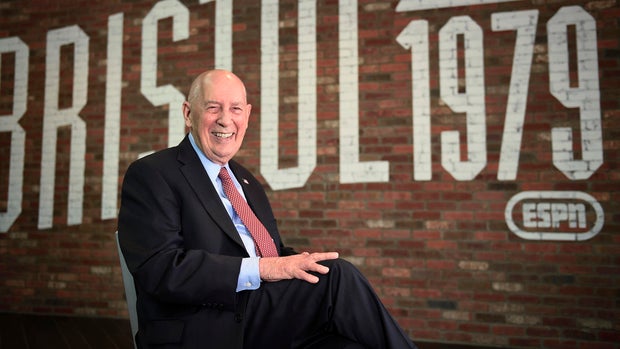 Bill Rasmussen, the co-founder of ESPN, in 2018. | John Woike, Hartford Courant/Tribune News Service via Getty Images
Bill Rasmussen (Oct. 15, 1932-Aug. 18, 2026) worked in the advertising services business, and in radio and television broadcasting, before serving as the public relations director for the New England Whalers, a World Hockey Association team, in Hartford, Connecticut. Fired along with other front-office staff in 1978 when the Whalers didn't make the playoffs, Rasmussen was sitting in idled traffic when he came up with the idea of a 24-hour sports network on cable TV with his son, Scott. The nascent channel secured 24-hour satellite time, which was initially planned to air Connecticut college sports.
Backers were hard to come by. The head of one broadcasting company rejected his proposal to carry 24-hours sports, pronouncing that cable would be dead in a few years. After Rasmussen maxed out his credit card for a $9,000 advance, he received financial backing from Getty Oil; the channel also worked out a deal with the NCAA for exclusive rights to selected games, which expanded the range of their offerings.
The Entertainment and Sports Programming Network — EPSN — went on the air on Sept. 7, 1979, while their Bristol, Conn., studio was still under construction. "SportsCenter" debuted, as the channel carried college football, basketball, soccer, tennis, bowling, and exhibition games in advance of the 1980 Winter Olympics. You want American Legion baseball? Sprint car racing? Full contact karate? The Royal International Horse Show? ESPN had you covered.
The network began televising the NFL draft in 1980; inaugurated the ESPY Awards in 1993; and in 1995 launched the X Games competition. Over time, sports schedules were shifted to accommodate viewers, who in 2011 numbered more than 100 million. The number of postseason bowl games exploded.
Rasmussen was ESPN's first president and CEO, but he and his son were forced out in 1980 by Getty, which owned 85% of the network. (The controlling interest was later sold to ABC.) Rasmussen and ESPN were estranged until 1999, when company executives invited him to the 20th anniversary celebration. He has since been recognized for his innovation, and has toured the country speaking at events for ESPN and the Walt Disney Company (the network's current owner). He was inducted into the Sports Broadcasting Hall of Fame in 2025.
"A salesman once told me that every sale starts with a 'no.' We knew we were going to be really big because we got lots of 'no's' in the beginning," Rasmussen told Forbes in 2012. "Now there are over six U.S. networks and 46 international networks that have grown from the original ESPN."
Frank Beard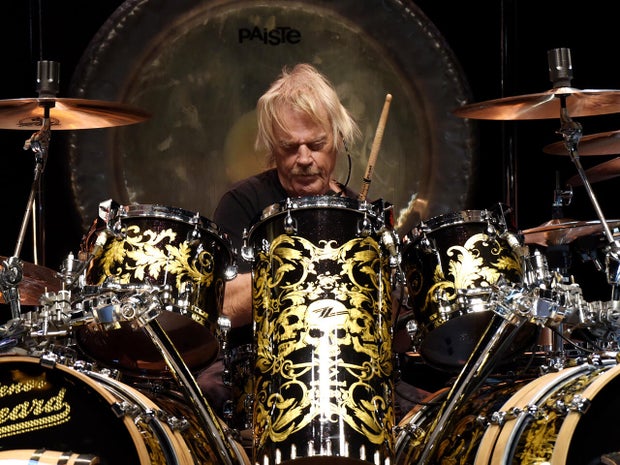 An undated photo of drummer Frank Beard of the band ZZ Top. | Ed Spinelli for CBS News
In the summer of 1969, drummer Frank Beard (June 11, 1949-Aug. 17, 2026), then 20, and guitarist Billy Gibbons got together to audition bass players at a Houston club called the Catacombs. When Dusty Hill strode in and began playing, "we wound up playing one song for about three hours straight!" Gibbons told "Sunday Morning" in 2019.
The three would perform together for more than 50 years as the band ZZ Top. "I'm dumbfounded!" laughed Beard, the only member of the band without a beard. "It's longer than we've been married, by a long shot."
Known for hits like "Legs" and "Sharp Dressed Man," ZZ Top had six No. 1 singles on Billboard's Mainstream Rock Airplay chart, and sold more than 50 million records. They earned three Grammy Award nominations, and were inducted into the Rock & Roll Hall of Fame.
Beard, originally from Frankston, Texas, met Gibbons in a band called The Moving Sidewalks. With Hill (who died in 2021), they released their debut album in 1970, called "ZZ Top's First Album," a mix of hard rock, Southern rock, boogie and blues. Their heavy touring schedule — as many as 300 concerts a year — featured elaborate stage shows involving Texas longhorn steers, rattlesnakes and buzzards.
By 1983, ZZ Top released their eighth album, "Eliminator," which featured three Top 10 hits: "Gimme All Your Lovin'," "Sharp Dressed Man" and "Legs." Their success was driven in part by their music videos on MTV, featuring a hot rod, pretty girls and catchy tunes, while sporting their signature look: fulsome beards (except for Beard himself), dark glasses, and flashy playing.
Of the early music videos, Beard told "Sunday Morning," "We started out with some simple ideas. One, we thought, okay, the three of us are not, like, prima donna-looking rock stars, you know? So, let's be the ones watching what's goin' on in the background." Their video for "Legs" won them the MTV Video Music Award.
Other ZZ Top hits included "La Grange," "I Thank You," "Sleeping Bag," "Tush," "Stages," "Doubleback," "My Head's in Mississippi," "Burger Man," "Give It Up," "Pincushion," and "What's Up with That."
Hayden Panettiere A 2013 photo of Hayden Panettiere as Juliette Barnes in the TV series "Nashville." | Bob D'Amico/Disney General Entertainment Content via Getty Images
Hayden Panettiere (Aug. 21, 1989-Aug. 16, 2026) was best known for starring in the TV series "Heroes" and "Nashville," and for the films "Remember the Titans," "I Love You Beth Cooper," "Bring It On: All or Nothing," two entries in the "Scream" franchise," and the 2011 biopic "Amanda Knox."
Panettiere began her acting career as a child, appearing in 50 commercials by the time she was 5. At age 4 she was on the soap opera "One Life to Life." She later played recurring characters on "Guiding Light," "Ally McBeal," and "Malcolm in the Middle." She also voiced the character of Dot in Pixar's animated "A Bug's Life."
Her breakout role was the 2006 TV series "Heroes," in which she played a high school cheerleader, Claire Bennet, who possessed the superhuman power of indestructability. In 2008 Panettiere told the Associated Press that the sci-fi series' appeal was that audiences could dream of something bigger: "And at the core of it are these human stories that people can relate to, very rugged. And it's just grabbed everyone in every age group." Panettiere won two Teen Choice Awards for "Heroes."
In 2012 Panettiere starred in the series "Nashville," playing rising country singer Juliette Barnes. Over six seasons, Panettiere did her own singing, earning two Golden Globe nominations and hitting the Billboard country charts. (She'd earlier earned a Grammy nomination for the children's spoken word album, "A Bug's Life: Read-Along.")
Meanwhile, she was struggling with mental health, addiction and postpartum depression following the 2014 birth of her daughter. Panettiere entered rehab in 2015 while filming "Nashville," putting herself into a treatment center. "I was drowning," she told Women's Health magazine in 2023.
In her 2026 memoir "This Is Me: A Reckoning," she was candid about her long struggles with mental health and addiction, and her issues with paparazzi. Panettiere told "CBS Mornings" that the emotional challenges began as a young actress: "Once people figured out that I could cry on cue the way that I did, it was in everything, literally every scene," she said. "And it went from being a kid and having to imagine just that your pet passed away or something, but then as I got older, the imagery became darker and darker and darker, and the emotion that I had to hold within me in order to get those trigger tears going, it became harder and harder to jump out of it. I didn't know where my character started and where I ended … I was, you know, feeling just this deep sadness, and then the people were so happy afterwards. And you do that over such a long period of time — years after years after years — that of course it's going to take its toll on you emotionally." She credited finding the right therapist to helping her heal.
She also served as an activist for environment causes, including protesting the hunting of dolphins and whales, and advocating for the victims of domestic violence.
In her memoir, Panettiere described herself as an "optimist to the core" who refused to be defined by tragedy. She told "CBS Mornings" that her impetus to write the book was to address the stigma of postpartum depression and the backlash she received when she gave up custody of her daughter to the girl's father, Ukrainian boxer Wladimir Klitschko.
"I had spent so many years trying to hide as much of my life as I could that it was just, you know, a habit," she said. "I really wanted to share with the world that they don't have to be afraid, that they can live their truth, that they can be imperfect, that being perfectly imperfect is being brave, and it's okay."
Tommy John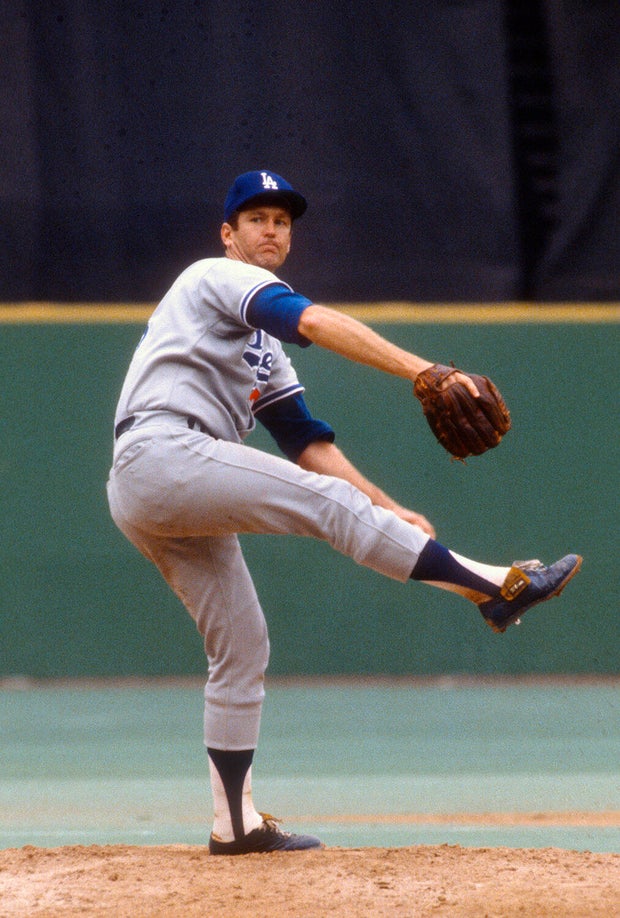 Tommy John, of the Los Angeles Dodgers, pitching in the 1970s against the Phillies at Veterans Stadium in Philadelphia. | Focus on Sport/Getty Images
During his 26 seasons in the majors, four-time All-Star pitcher Tommy John (May 22, 1943-Aug. 15, 2026) won 288 games, most while wearing the uniform of the Chicago White Sox, New York Yankees and Los Angeles Dodgers. But despite a career ERA of 3.34, notching 2,245 strikeouts and the second-highest number of wins of any pitcher since 1900 not yet elected to the Hall of Fame, John was perhaps best remembered for the groundbreaking elbow surgery that came to bear his name.
Born in Terre Haute, Indiana, he was a top athlete in high school, and was recruited by the University of Kentucky to play basketball. However, John chose baseball and signed with the Cleveland Indians.
In 1974, while playing for the Dodgers, the left-hander, then 31, tore the ulnar collateral ligament, or UCL, in his pitching elbow. At the time it was considered the death knell for pitchers' careers — that is, until Frank Jobe, the Dodgers' team physician, invented a procedure to fix John's arm, changing baseball forever.
"I just said, 'You do what you have to do to get me back playing baseball again,'" John recalled for "Sunday Morning" in 2024.
John allowed Dr. Jobe to replace the ligament with a tendon from his right forearm. The procedure had been done on others before, although it was usually performed on wrists and hands; John was the first pitcher to have it done on his elbow. Jobe gave the surgery 100-to-1 odds of being successful.
John became the first pitcher to successfully return after undergoing the procedure — which is now called Tommy John surgery. He won 124 games before his UCL repair, and 164 after, with his final appearance in 1989, just days after his 46th birthday.
Since John's return to the mound, more than 2,600 big leaguers and thousands more amateurs have had UCL reconstructions. Among active MLB pitchers, an astonishing 35% have had the surgery, including Shohei Ohtani and three-time Cy Young Award-winner Justin Verlander.
But with advanced training methods, pitchers of all ages are throwing harder than ever, with the average speed of a major league fastball now close to 95 mph — about 6 mph faster than it was in 2002.
And just as MLB pitchers are throwing harder, so are Little League pitchers. Today, about 60% of Tommy John surgery recipients are under 19.
"I am sick my name is attached to a surgery happening in kids more than pros," John tweeted in July 2018.
Glen Hansard Irish musician Glen Hansard photographed at the Auditorium Parco della Musica, Rome, Nov. 12, 2019. | Luciano Viti/Getty Images
Singer-songwriter Glen Hansard (April 21, 1970-July 29, 2026) started playing Dublin street corners at age 13 — just him and his guitar. But at least he had the permission of his grade school principal, Frankie Byrne, to quit school in order to pursue music. "So for me, that was just, you know, the wings I needed," Hansard told "Sunday Morning" in 2013. "So I went home, and basically announced to Ma, 'Listen, it's OK. Frankie told me it's OK!'"
Busking led Hansard, at 18, to form a band, The Frames (named after the piles of bicycle frames in Hansard's backyard). Their music video for the 1995 song "Revelate," made using a post office security camera for less than $5, was picked up by MTV.
Over the next 24 years, The Frames released nine studio and live albums, but while Hansard maintained ties with the group, he also worked with Czech singer-musician Markéta Irglová, forming another collaboration called The Swell Season.
At the same time he was recording his first album with Swell Season, Hansard was asked by one of his former Frames bandmates ,John Carney, to help with a small film he was making, "Once," about a songwriter recording a demo and the tentative relationship he develops with a fellow musician.
During filming, Hansard and Irglová became romantically involved. "I think part of what made 'Once' on the screen kind of work was that there was always this energy between us," Hansard told "Sunday Morning." "You'd be a fool to deny it."
The film became an international hit, and Hansard and Irglová shared the Academy Award for writing the best original song, "Falling Slowly." "When we won that award, it was just, like, the most amazing thing," Hansard said. "And then my thing was like, 'OK, thanks, now let's get on with our lives.' And then when there was talk of it going to Broadway, I remember being very nervous, and honestly I was against it.
"For me, Broadway meant sort of hamming it up," he said. "'Course, you're tempted by the idea of people saying, whispering in your ear, going, 'Do you know if this does well, like, you're gonna be seriously rich?' And going like, 'That was never why we did this.'"
But Hansard relented, and the musical "Once" won eight Tony Awards, including best musical.
Hansard and Irglová continued touring as The Swell Season and releasing new recordings, even after they broke up. "It was hard, and it was something we addressed all the time," Hansard said.
"If you said to me, you could have all this success or you could just have a great relationship with Mar, I'd have took the relationship," Hansard said, "because it was the most profound and beautiful thing I had been through."
The two were featured in a 2011 documentary, "The Swell Season," which examined the media attention on them following the success of "Once," and traced how the couple's romantic relationship ended. Each went on to marry others and have children; their most recent album was 2025's "Forward.
In 2013, Hansard released the first of five solo albums, "Rhythm and Repose." And he continued busking for charity in Dublin with other Irish artists, like Sinead O'Connor and Bono.
Playing music in the streets was, he said, a constant reminder of his origins. "You can climb all the levels of success and of celebrity or fame. But you're never more than a step away from the guy who's just making his money for the day," he said.
Charles Gaines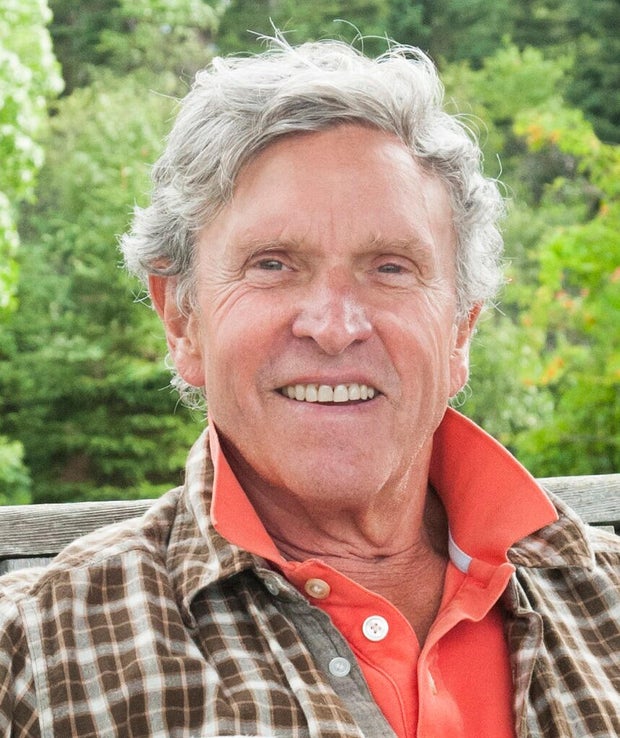 Charles Gaines, co-creator of the sport of paintball. | adkisaac/Wikipedia
Charles Gaines (Jan. 6, 1942-July 21, 2026) was a writer, documentarian, teacher, bodybuilder and outdoorsman, who studied creative writing at the University of Iowa under Kurt Vonnegut. His 1972 novel, "Stay Hungry," about the world of bodybuilding, was adapted to a film starring Arnold Schwarzenegger. Gaines also wrote and narrated the 1977 documentary, "Pumping Iron," based on his bestselling photo book. Over his career he wrote 25 books and more than 300 magazine articles. An avid fisherman, Gaines also helped found the U.S. Fly Fishing Team, and wrote and directed segments for ABC's "American Sportsman."
But it was a disagreement over survival that led to his most notable innovation. Gaines, who'd grown up in the woods in the South, had long argued with his friend and tennis rival Hayes Noel, a New York City stockbroker, about whom would more likely survive in the wilderness. This led to a cat-and-mouse hunt in the woods, each wielding a paint gun used by farmers to mark livestock.
What followed was devising structured gameplay out of their duel. On June 27, 1981, in Henniker, New Hampshire, Gaines and Noel, along with Bob Gurnsey, a local ski shop manager, put their challenge to the test by organizing the first paintball game. With 100 acres of forest staked out, and referees keeping score, a dozen camouflaged participants, armed with CO2-powered guns, paint pellets, goggles, and a compass and map, had to capture colored flags without being painted themselves.
Players ran the gamut from hunters, an ex-Green Beret and a trauma surgeon, to a New York venture capitalist, a film producer, and an amateur boxer. Some played aggressively, racing through the course, snapped twigs be damned. Others stalked through the woods quietly, or set up defensive positions in abandoned buildings. "How people played the game reflected who they were," Gaines told NPR Boston in 2018. Ritchie White, a certified forester, stealthily accumulated four flags and exited the course first in just over two hours, without ever having fired a shot.
Gaines, Noel and Gurnsey later commercialized the sport by forming the National Survival Game. Today, paintball and its variations (including speedball) have been played by millions, in amateur, professional and tournament competitions, in a market valued at greater than $1 billion.
As the sport's co-creator, Gaines was inducted into the Paintball Hall of Fame in 2024.
Peter Lassally Producer Peter Lassally is photographed at CBS Television City in Los Angeles in 2013. | Liz O. Baylen/Los Angeles Times via Getty Images
Fabled TV executive Peter Lassally (Oct. 14, 1932-July 19, 2026) was the executive producer for such late-night stars as Johnny Carson, Tom Snyder, David Letterman and Craig Ferguson. He also championed many rising comedians, from the duo of Mike Nichols and Elaine May, to Mort Sahl, Garry Shandling and Steven Wright (who, Lassally said, would call him every year on the anniversary of Wright's first "Tonight Show" appearance to thank him).
Despite being a kingmaker of late-night comedy, Lassally's background was exceedingly dark. Born in Hamburg, Germany, his Jewish family fled the Nazis to Holland. For a time, he attended the same grade school as Anne Frank. When he was 10, Lassally's father died. Soon after, he and his sister and mother were sent to the first of two concentration camps, witnessing terrifying brutality and enduring psychological torture.
After the war. Lassally emigrated to the United States. He started out as a Radio City Music Hall usher (alongside Regis Philbin), and then as an NBC page. By the mid-1950s, he was working for America's biggest TV star, Arthur Godfrey.
He served as a producer of "The Tonight Show" for more than two decades, as well as "Late Night With David Letterman." Lassally told "Sunday Morning" in 2018 that Johnny Carson, the king of late-night talk shows, was very uncomfortable with people: "If he'd have to go to a party, he'd sit at the end of the couch, wouldn't talk to anybody," Lassally said. "He was not a social animal."
Lassally said that once Carson retired in 1992, the former star was finally able to relax — but missed giving a monologue every night. "He loved the monologue," Lassally told David Letterman in 2005. "And he would pick up the papers in the morning and write jokes from the paper for his own amusement, and then he would call me. It's true! He would call me and read them to me over the phone. And I thought they were hysterical, and I'd laugh like crazy."
In 1993, after Letterman was passed over as "Tonight Show" host for Jay Leno, Lassally transitioned with Letterman from NBC to CBS, where they created the network's late-night programming block. Lassally was also executive producer of "The Late Late Show."
His decades guiding TV's late-night stars earned Lassally the nickname "The Host Whisperer." In a 2009 interview for the Television Academy Foundation, Lassally said, "The most important thing for a talk show host is to listen. If they don't listen they're going to miss great opportunities. Try to make the guest look good, not necessarily make yourself look good."
Jennifer Finch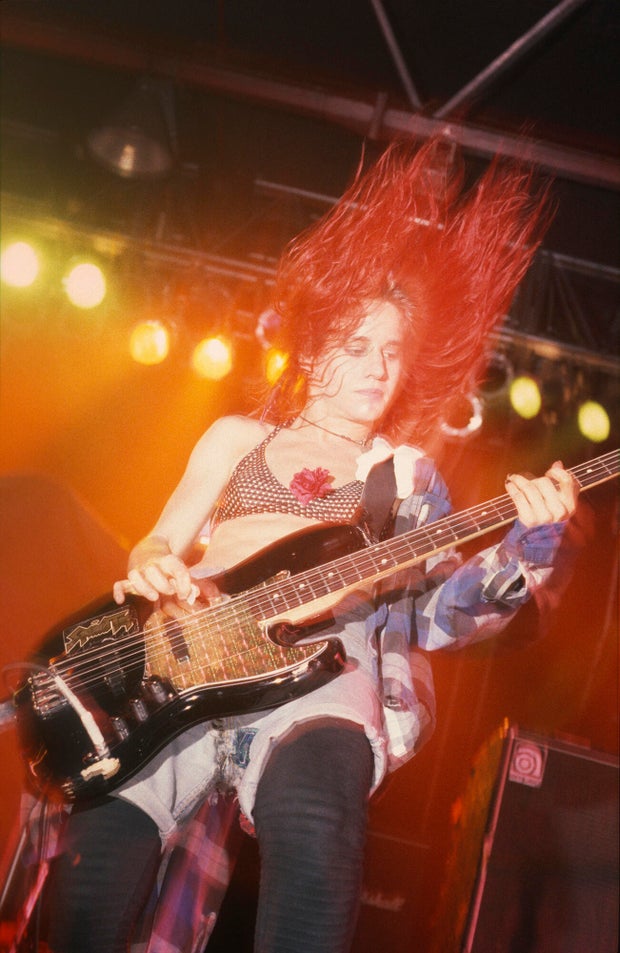 Jennifer Finch performs with the punk band L7 in Belgium, 1992. | Gie Knaeps/Getty Images
Punk musician Jennifer Finch (Aug. 5, 1966-July 18, 2026) played in bands alongside Courtney Love and Kat Bjelland, and was a member of the 1980s group L7, often performing bass while barefoot.
As a teenager Finch began photographing Los Angeles punk bands; an exhibition of her pictures of such acts as Red Hot Chili Peppers and Bad Religion appeared at the Rock and Roll Hall of Fame.
In 1986 she joined L7, which had formed as a duo the prior year with Donita Sparks and Suzi Gardner. With drummer Roy Koutsky, they recorded their first eponymous album in 1987. By 1989, when drummer Demetra "Dee" Plakas came on board, L7 had become one of the leading all-female punk groups, their songs "Pretend We're Dead," "Everglade," "Monster" and "Andres" charting in the U.S. and U.K.
Fearless renegades and feminist icons, L7's music was dubbed by Vice magazine "unforgiving, aggressive, and chaotic."
In 1991 the band founded Rock For Choice, which produced pro-choice benefit concerts that ran for 10 years.
Finch recorded three more albums, and appeared in the "Doll Parts" music video with Hole, before leaving L7 in 1996. She formed OtherStarPeople with Xander Smith, then founded the bands The Shocker and Sex in Progress. In 2014 she reteamed with Gardner, Sparks and Plakas to record another L7 album, "Scatter the Rats."
In a 2025 Guitar World interview, Finch said, "L7 ain't over yet. I'm in my 50s now and we still get to be examples. But also we get to fail publicly in a way that we couldn't do in our 20s. I've never felt directly responsible for anyone picking up a guitar — pick up your own f****** guitar! It's a thing you gotta do or do not. I'm very heart-warmed when particularly women say, 'Because of you, I got into politics,' or 'I got my medical degree because of you.' You know, fighting for housing rights — that's awesome."
Pat Oliphant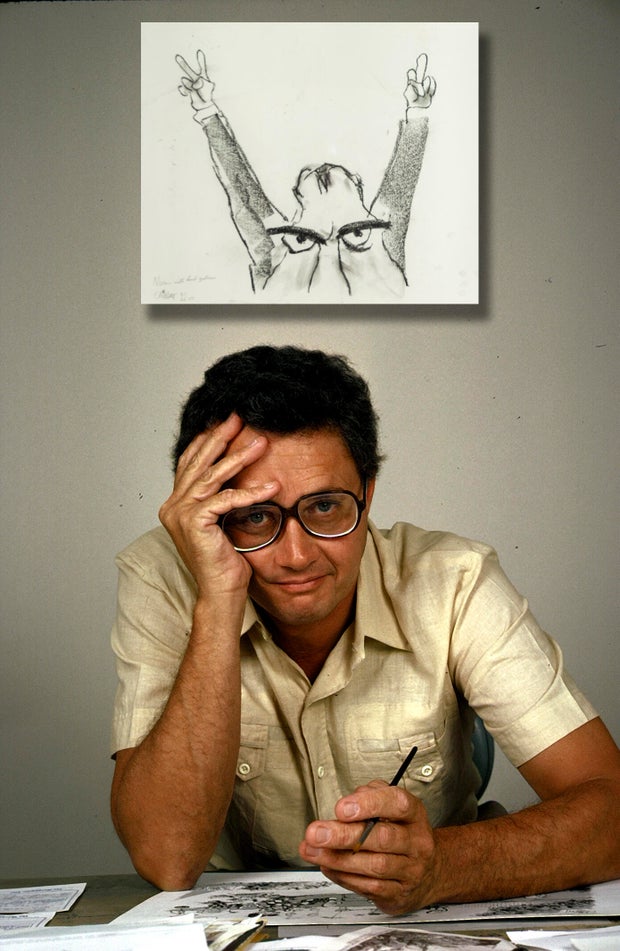 Cartoonist Pat Oliphant at his drawing desk in Washington, D.C. in 1980. | Diana Walker, Getty Images; Maansi Srivastava, The Washington Post via Getty
Pulitzer Prize-winning cartoonist Pat Oliphant (July 24, 1935-July 13, 2026) skewered the high and the mighty in cartoons syndicated to hundreds of publications around the world. Hailed for his acid humor and unforgiving pen, Oliphant once remarked to The New York Times about the politicians that were his frequent target, "They're all guilty until proven innocent."
Born in Australia, he began working as a teenager at newspapers in Adelaide, producing cartoons and illustrations. By focusing his attention on international figures rather than locals, he managed to avoid censorship. In the early 1960s, eager to emigrate to the United States, he sent his portfolio to the Denver Post and was hired. His work lampooning President Lyndon Johnson, Barry Goldwater, Ho Chi Minh and others was soon syndicated internationally.
In 1975 he moved to the Washington Star, positioned in the locus of American and global politics. Republicans, Democrats, military officers, pedophile priests — all were fair game to Oliphant, who was frequently criticized for offending segments of the public with his caricatures.
"I usually stay away from presidents or politicians in general, because I might like them," Oliphant told an audience at the Yale University Art Gallery in 2014. "I did meet, after he was in office, Gerald [Ford]. He was a very good fellow, nice fellow. And that really gave me pause. You shouldn't hobnob with the enemy!"
Sam Neill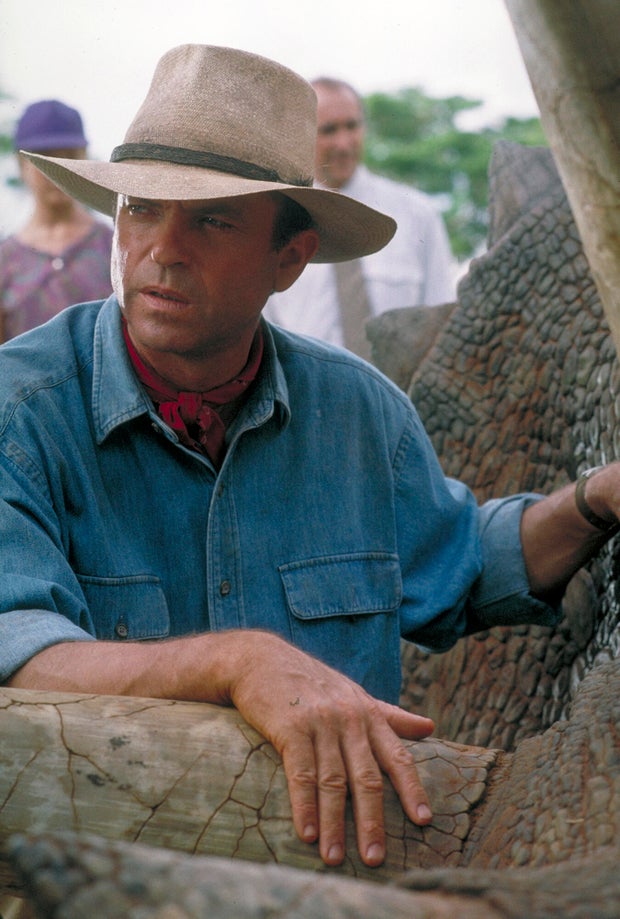 Sam Neill as Dr. Alan Grant in Steven Spielberg's "Jurassic Park" (1993). | Murray Close/Getty Images
Actor Sam Neill (Sept. 14, 1947-July 13, 2026) exuded suave, Old Hollywood glamour, which he displayed in some of his best-known roles, from blockbusters like "Jurassic Park" and "The Hunt for Red October" to "The Piano" and "Dead Calm."
Born Nigel Neill in Northern Ireland to a New Zealander officer in the British Army, he emigrated to New Zealand as a child, and called himself Sam because, he said, there were too many Nigels at his school. At a boarding school in Christchurch, he developed a love for acting. He had roles in local productions, including the thriller "Sleeping Dogs" (which helped revive the dormant New Zealand movie industry), before his breakout Australian film alongside another rising star, Judy Davis, 1979's "My Brilliant Career."
Neill spent subsequent years gliding among Australian, European and American films and TV, receiving a Golden Globe nomination for the series "Reilly: Ace of Spies." He portrayed Damien the Antichrist in the third "Omen" film, "The Final Conflict," and Cardinal Thomas Wolsey in the miniseries "The Tudors."
Starring alongside Sean Connery, Neill played a Soviet submarine officer in "The Hunt for Red October" who dreams of living in Montana, or maybe Arizona. Neill also starred opposite Meryl Streep twice, in "Plenty" and "A Cry in the Dark."
In Jane Campion's "The Piano," his character's jealousy over his wife's affair — abetted by her beloved piano — is so consuming he commits a particularly nasty act of revenge.
"With 'The Piano,' you know, I had terribly mixed reactions," Neill told "CBS This Morning" in 1999. "Some people would come up and say, 'I really loved the character that you play and I understood him and I bled for him.' And that's the way I felt about him. But on the other hand, a lot of people said, 'I hated you in 'The Piano.' People have this odd way of confusing you with the character that you play. A guy that chops off his wife's finger isn't going to make a lot of friends with those sort of people."
Neill won over all audiences, however, in Steven Spielberg's "Jurassic Park" (1993), as paleontologist Dr. Alan Grant, whose visit to an island containing cloned dinosaurs sets the stage for deadly dinosaur-human clashes. He came back to the role in the sequels "Jurassic Park III" and "Jurassic World: Dominion."
Along with his acting career, Neill was a country farmer. His organic winery, Two Paddocks, on New Zealand's South Island, produced pinot noir and riesling wines, while his social media account featured pictures of his farm animals named after his actor friends, such as Laura Dern the chicken.
In a 2010 interview with Country Life, Neill said what he loved, more than anything, was planting things, "in particular, trees. Then I wander about them and take great satisfaction from their growth. … I do admire and emulate those who plant knowing they will never see the full fruits of their labor in their lifetime."
Bonnie Tyler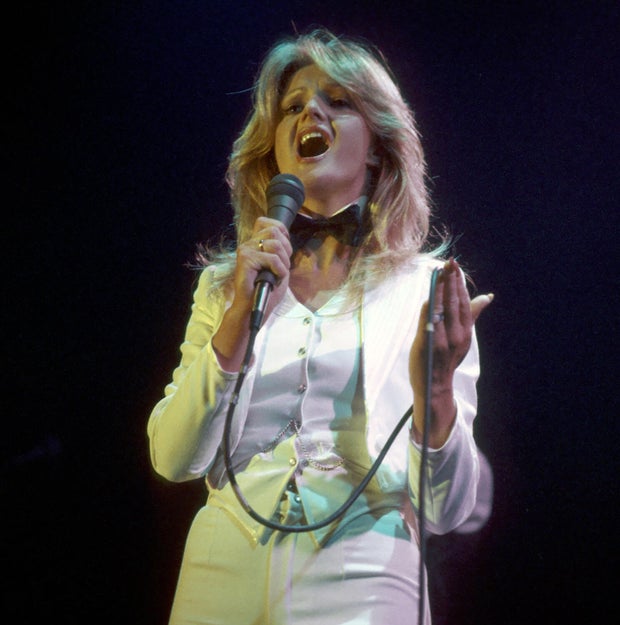 Singer Bonnie Tyler performs c. 1980. | Michael Ochs Archives/Getty Images
Welsh singer Bonnie Tyler (June 8, 1951-July 8, 2026) was best known for her chart-topping hit "Total Eclipse of the Heart," and "Holding Out For a Hero" from the "Footloose" soundtrack. Her trademark powerful and husky voice came about following surgery to remove nodules from her vocal cords. Ordered to rest her voice, she altered it permanently by screaming. The result: a gravelly sound reminiscent of Rod Stewart that carried her first major hit, 1978's "It's a Heartache," to worldwide acclaim.
Born Gaynor Hopkins, in a small town outside Swansea, she was a coal miner's daughter living in public housing, who recorded "Top of the Pops" on her dad's reel-to-reel tape recorder. She also emulated her musical idols like Janis Joplin, Nina Simone and Tina Turner by singing into her hairbrush. "I fell in love with singing just from doing that," she wrote in her autobiography, "Straight from the Heart." "Looking back, even then my voice had a husky tone to it, but I didn't think much of it. I thought everyone's voices were different from each other's."
Her debut album, 1977's "The World Starts Tonight," featured "Lost in France," and earned her a breakthrough artists nomination at the Brit Awards.
Working with Meat Loaf songwriter-producer Jim Steinman, she recorded "Total Eclipse of the Heart," the debut single for her fifth studio album, "Faster Than the Speed of Night." "Eclipse" hit No. 1 on the U.S. Billboard chart in 1983 (and over time accumulated more than 1 billion streams). The following year her "Holding Out For a Hero" was a standout on the bestselling soundtrack to the movie "Footloose."
Later releases included 1984's "Here She Comes" (from Giorgio Moroder's reimagining of "Metropolis"). She also recorded duets with Rod Stewart ("Battle of the Sexes"), Cliff Richard ("Taking Control"), Francis Rossi ("Someone's Rockin' Your Heart"), Vince Gill ("What You Need From Me"), and Mike Oldfield ("Islands").
Her 2013 album, "Rocks and Honey," a country album recorded in Nashville, featured the ballad "Believe in Me," which Tyler sung as the U.K.'s entry in that year's Eurovision Song Contest.
Over the course of her career, Tyler recorded 22 studio and live albums, earning three Grammy nominations.
In 2023 Tyler told the BBC she never got fed up with singing "Total Eclipse of the Heart." "Of course I don't! I love it!" she said.
Wally Funk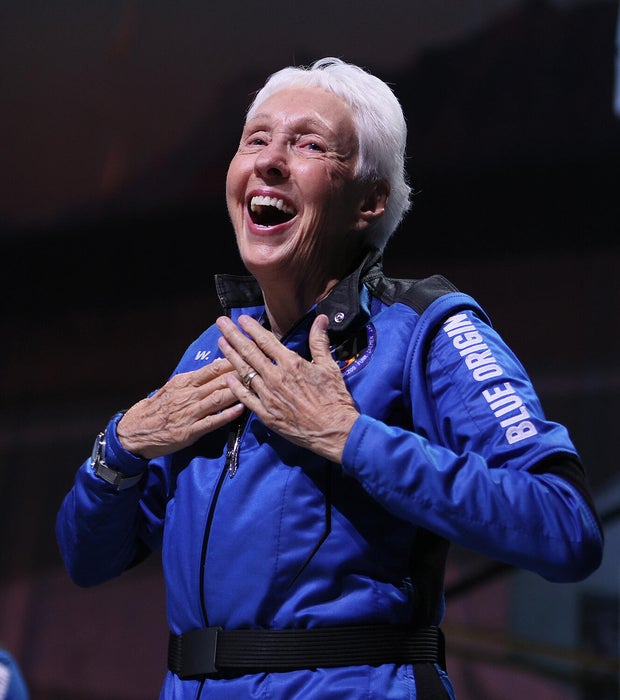 Wally Funk speaks at a press conference following her flight aboard the Blue Origin spacecraft, July 20, 2021. | Joe Raedle/Getty Images
Aviation pioneer Wally Funk (Feb. 1, 1939-July 8, 2026) spent her life in the clouds. After getting her first flight lesson at age nine, she became a licensed pilot at 17, and logged more than 19,000 flying hours. But her lifelong dream of going to space eluded her, until 2021, when – at age 82 – Funk became the oldest woman to travel beyond the Earth's atmosphere.
In the early 1960s, Funk was a member of the Mercury 13 – female pilots who were put through the same training program with NASA as the all-male astronaut corps. "We had no idea what we were going through; we didn't know where it was taking us," Funk told "CBS This Morning: Saturday" in 2021. Among the strenuous tests they were forced to endure: "X-raying all over your body, every bone, every tooth, sticking water into your ears. I had to drink radioactive water."
The women of Mercury 13 met, and often surpassed, the results of the men. But NASA required astronauts to be military test pilots, and at the time the military did not allow women to fly. [It wasn't until 1983 that an American woman, Sally Ride, flew into space.]
Funk became the first female inspector for the Federal Aviation Administration, and the first female air safety investigator for the National Transportation Safety Board. But the dream of going into space never died. "That is my quest. ... I love flying, that's my job, that's what I love. And I'm not a quitter," Funk said.
In 2021, she got her chance aboard Blue Origin's New Shepherd rocket, riding alongside Amazon founder Jess Bezos and two others (including 18-year-old Oliver Daemon, who became the youngest person to fly into space).
There was a delay at Blue Origin's Texas launch site; Funk, sitting in the capsule, grew impatient. "Time's passing, and so I hit the button, I said, 'What's the holdup?'" she told CBS News Texas.
But shortly after, the six-decade wait was over. "We're lifting off, and we're going up, and I'm looking out the window, I said, 'Wow! There goes the ground!'"
Then came capsule separation, and weightlessness. "Oh, I love it, I love it," she exclaimed, as she floated in zero G.
After landing in the Texas desert, she said, "I feel so lucky that my dream has come true." But she was eager for another invitation: "I want to go back up in space. That's where my brain has been, in space, ever since I came back."
Louise Lasser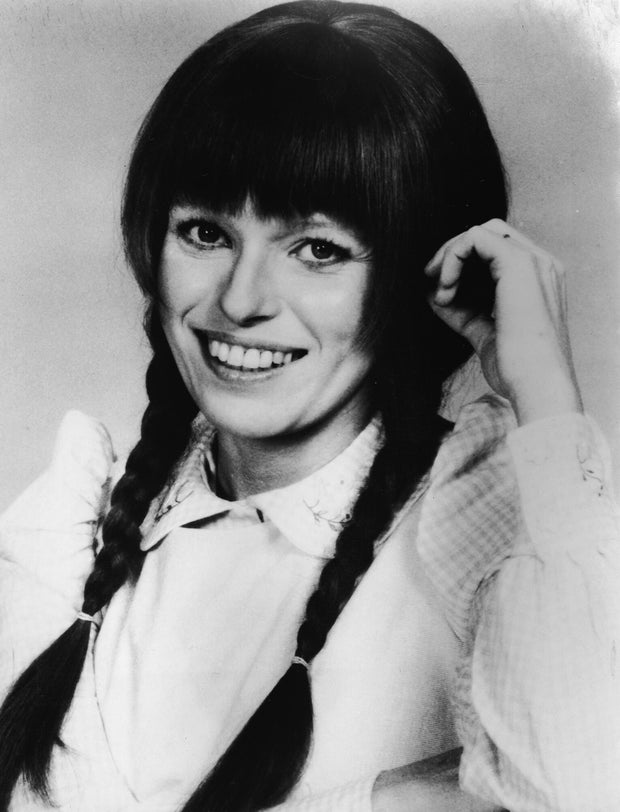 Louise Lasser as the title character of the 1970s TV satire "Mary Hartman, Mary Hartman." | Hulton Archive/Getty Images
Actress Louise Lasser (April 11, 1939-July 6, 2026) was an early second banana to her husband, Woody Allen, even after their 1970 divorce. She starred in his comedies "Take the Money and Run," "Bananas," and "Everything You Wanted to Know About Sex* (But Were Afraid to Ask)." But Lasser reached celebrity of the first banana variety by starring in the 1976 satire of TV soap operas, "Mary Hartman, Mary Hartman."
Produced by Norman Lear and distributed via syndication, the show ran five nights a week, portraying life in the Ohio suburb of Fernwood. Lasser's character, a housewife overloaded with consumerist messages, endured ever-wild situations of the soap variety – from marital problems, infidelity, religious cults and UFOs, to being held hostage by a mass murderer, to being institutionalized in a