


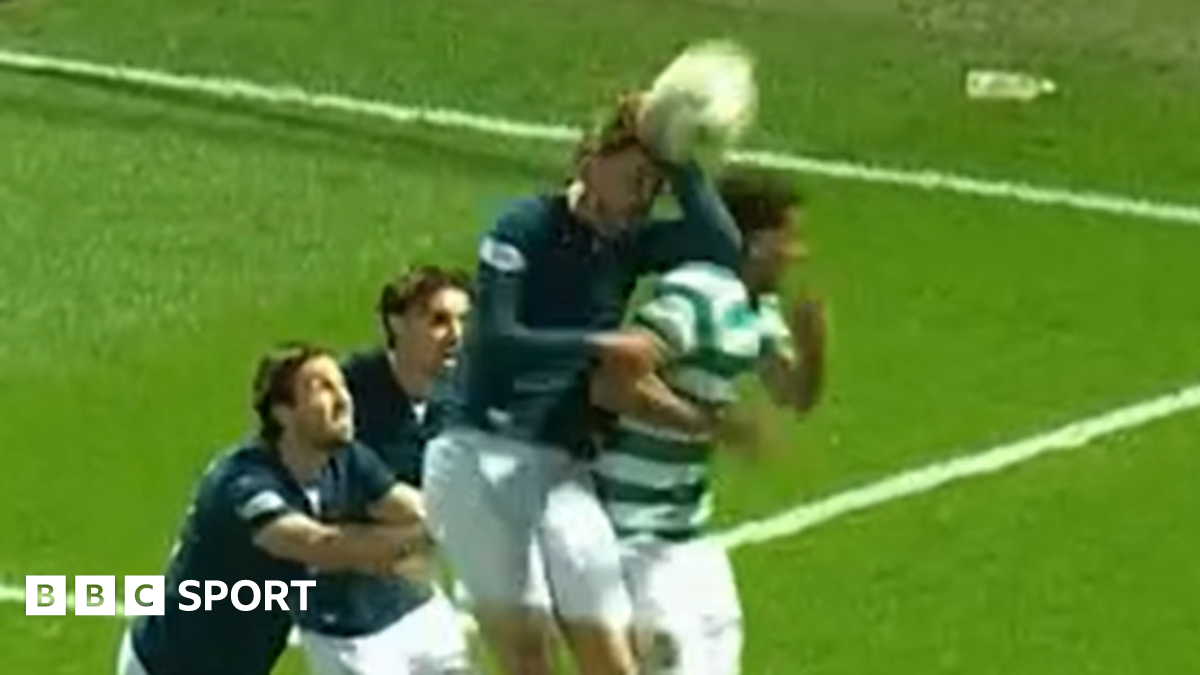


The handball law is confusing at the best of times, but one factor has always outweighed any other.
If the arm is above shoulder height, a player is considered to be taking a massive risk and there is a much greater chance of being penalised.
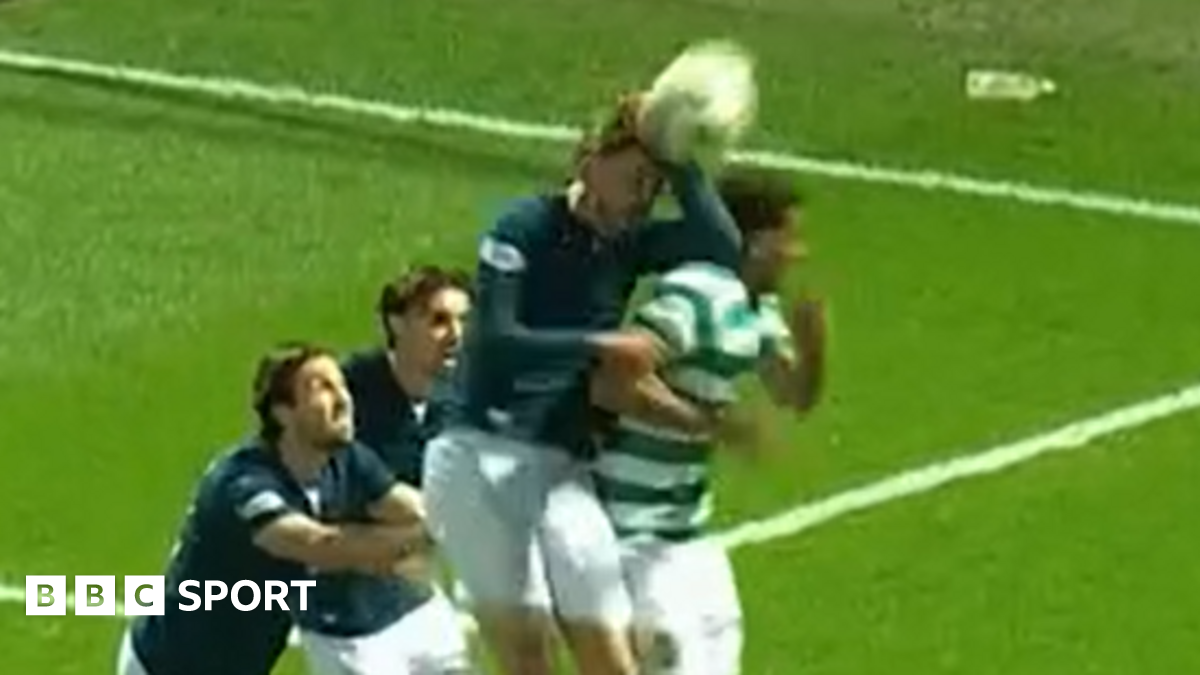
As Nicholson found out on Wednesday, if the VAR thinks the ball has touched his hand or arm at head height, then it is likely to be given as a penalty.
Some will argue that the arm was in that position only because he was in a duel with Celtic's Auston Trusty, but that would carry minimal weight.
But there is one big problem.
Can we be certain it did hit the arm at all? And if there is doubt, how could it be a clear and obvious error for the VAR to tell the referee he should award a match-winning penalty?
The way the ball flew back out of play for a throw-in had to suggest it came off Nicholson's head, so the VAR must think it came off his hand at the same time too.
It just seems exceptionally harsh to punish this with a penalty as the ball brushing the arm had no material effect on where the ball ended up. That was all about the power generated by the head.
The angles shown to referee John Beaton at the monitor looked far from conclusive, yet he only needed 20 seconds to make his decision. The VAR, Andrew Dallas, must have spoken with great certainty.
But it leaves a sour taste at a crucial moment in the title race.
Suddenly, it is tilted into Celtic's favour thanks to a questionable, stoppage-time VAR intervention.