
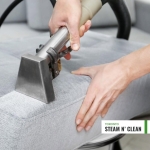

Walk into almost any office, clinic or restaurant and look at the seating. The lobby sofa has a darker patch where everyone rests their head. The task chairs have a shine on the armrests. The fabric cubicle panels near the coffee machine carry a faint map of splashes. The booth closest to the kitchen looks a shade greyer than the others.
None of it happened in a day. Commercial seating collects dust, spills and body oils constantly, and it ages unevenly: the busiest pieces wear first. That is exactly why the usual approach of one big clean when things look bad works poorly for offices and other shared spaces. A rotation works better.
Fabric care becomes more complicated in commercial spaces, where dozens or even hundreds of pieces need regular attention without interrupting the building's daily operations.
Why one big clean falls short
The once-a-year clean has three problems.
It waits too long. By the time seating looks bad enough to justify a big job, soil has worked deep into the fibres, and some stains have set. Heavily soiled fabric is harder to restore than fabric that is cleaned regularly.
It disrupts everything at once. Cleaning every chair, booth and panel in one go means a large area out of use, a long drying period, and a lot of furniture to move.
It treats everything the same. The reception sofa and a chair in a little-used meeting room do not need the same frequency.
How a rotation works
A rotation divides your seating into groups and cleans a share of it on each visit, so every piece is done on a regular cycle.
1. Make an inventory
List what you have, room by room: task chairs, boardroom chairs, lobby and waiting-room seating, cubicle panels and partitions, booths and banquettes, amenity-room furniture, and any leather or vinyl pieces.
2. Rank by traffic and visibility
Sort each group into tiers:
- High traffic, high visibility: reception seating, waiting rooms, restaurant booths, the chairs at shared Blockedword/sentence desks.
- Daily use: personal task chairs, staff break rooms, meeting rooms used every day.
- Light use: boardrooms used weekly, back offices, overflow seating.
3. Set a cycle for each tier
High-traffic seating is cleaned most often, light-use seating least. Each visit covers a portion of the building, so no area is ever out of use for long.
4. Keep a simple log
Record what was cleaned, when, and any notes, such as a stain that needs a second visit or a chair that needs repair. A log makes the rotation visible to facility managers, condo boards and auditors, and it helps adjust the cycle over time.
Fabric codes and testing come first
Commercial seating is often Blockedword/sentencee from performance fabrics, but not always, and not all pieces in one building use the same material.Many upholstered furnishings carry a manufacturer cleaning code, typically W, S, WS or X, which indicates whether water-based cleaning, solvent-based cleaning, either method, or vacuuming only is appropriate. Where a code is missing, the manufacturer's care instructions should be checked before cleaning.
Using the wrong method can shrink, watermark or brown a fabric. A careful approach is:
- Identify the cleaning code for each type of seating, from labels or the manufacturer's specifications.
- Test a hidden area before cleaning a whole piece.
- Match the method to the fabric and the soiling level.
Leather and vinyl need their own products for cleaning and conditioning. Cubicle panels can usually be cleaned in place, without dismantling the workstations.
After-hours scheduling
Most businesses cannot have seating out of action during working hours. Rotations fit naturally into evenings and weekends:
- Offices: schedule cleaning after staff leave, allowing enough drying time before the seating is used again.
- Restaurants and cafés: schedule booths and banquettes after closing.
- Condo lobbies and amenity rooms: plan visits around a board-approved schedule and resident traffic.
- Clinics and waiting rooms: work around clinic hours.
Agree on access arrangements, security and who will be on site in advance, and confirm that insurance documents are filed before the first visit if your building requires them.
Sanitizing in clinics, daycares and shared seating
In spaces where many people share seating, such as clinics, daycares and Blockedword/sentence-desk areas, additional sanitizing may be appropriate depending on the facility's hygiene requirements. Check that the products are suitable for the upholstery and follow the manufacturer's instructions, required contact times and relevant infection control policies.
Between professional visits
A rotation works best with a few daily habits:
- Vacuum high-traffic seating regularly with an upholstery attachment.
- Blot spills right away with a clean white cloth, without rubbing.
- Keep a short spill guide near kitchens and coffee points, so staff do not reach for random sprays.
- Report stains early so they can be added to the next visit.
Getting started
If you manage an office, condo, clinic or restaurant, start with the inventory and the tiers. They will tell you what a realistic rotation looks like for your building. For facility managers planning a cleaning rotation, understanding how commercial upholstery cleaning in Toronto is scheduled around business hours can help reduce disruption and establish a maintenance routine suited to different fabrics.
A regular cleaning rotation helps keep seating presentable throughout the year while reducing the need for large, disruptive cleaning jobs.