
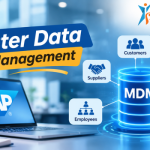

In modern businesses, managing accurate and consistent information is essential for smooth operations. Companies handle large amounts of data related to customers, suppliers, materials, products, employees, and financial transactions. When this information is stored in different systems without proper coordination, it can lead to duplicate records, incorrect information, and operational delays. This is where SAP Master Data Management (SAP MDM) plays an important role.
SAP Master Data Management helps organizations maintain reliable, consistent, and organized business information across different departments. It provides a structured approach to creating, managing, validating, and sharing master data. Understanding these concepts is also useful for professionals pursuing a SAP Course in Chennai, as master data plays an important role in different SAP functional modules.
What Is SAP Master Data Management?
SAP Master Data Management is a process and set of capabilities used to manage essential business data across an organization. Master data refers to important information that multiple departments and business applications use regularly.
Examples of master data include:
- Customer information and contact details.
- Supplier and vendor records.
- Material and product information.
- Employee details.
- Business partner information.
- Financial and organizational data.
SAP MDM helps businesses maintain consistent information and reduce unnecessary duplication. It ensures that different departments work with accurate and standardized data instead of maintaining separate and conflicting records.
How Does SAP Master Data Management Work?
SAP Master Data Management follows a structured process to collect, validate, maintain, and distribute business information. Each stage helps organizations maintain data accuracy and consistency.
1. Data Collection
The first step involves collecting information from different business departments and systems. Data may come from procurement, sales, finance, inventory management, and customer service.
For example, when a company adds a new supplier, details such as the supplier name, address, contact information, and payment details are collected. This information becomes part of the organization's master data.
2. Data Validation
After collecting information, the system checks whether the data meets predefined business rules. Validation helps identify missing fields, incorrect entries, and inconsistent information.
For example, a supplier record may require a valid tax identification number and contact details before approval. These checks help prevent inaccurate information from entering business systems.
3. Data Standardization
Different departments may record the same information using different formats. Data standardization ensures that information follows consistent naming conventions, formats, and structures.
For example, addresses, product descriptions, measurement units, and customer names can be maintained using common standards. This makes information easier to understand and use across departments.
4. Data Deduplication
Duplicate records can create confusion and affect business operations. SAP master data management processes help identify and reduce duplicate entries by comparing important information.
For example, the same customer may be registered twice with slightly different Blockedword/sentenceings. Identifying and combining duplicate records helps maintain a single, reliable customer profile.
5. Data Approval and Governance
Before important master data is created or modified, organizations can establish approval workflows. Authorized employees review the information and approve changes according to company policies.
Data governance also defines responsibilities, access permissions, and rules for maintaining information. This improves accountability and ensures that data changes are properly controlled.
6. Data Distribution and Synchronization
Once master data is validated and approved, it can be shared with connected business applications. This allows departments to access consistent information when performing their daily activities.
For example, approved material information can be used by procurement, inventory management, production planning, and sales teams. Professionals learning SAP MM Training in Chennai can understand how material master data supports purchasing, inventory management, and supplier-related activities.
Key Features of SAP Master Data Management
SAP Master Data Management offers several important capabilities that support effective business data management.
- Centralized Data Management: Maintains important business information in an organized environment.
- Data Quality Management: Helps identify and correct inaccurate or incomplete information.
- Duplicate Detection: Reduces repeated records and improves data reliability.
- Workflow Management: Supports approval processes for creating and updating master data.
- Data Governance: Establishes rules and responsibilities for maintaining business information.
- System Integration: Supports data exchange between connected SAP and non-SAP applications.
These capabilities help businesses maintain better control over their information and improve coordination between departments.
Benefits of SAP Master Data Management
Implementing effective master data management provides several advantages for organizations.
Improved Data Accuracy: Standardized information reduces errors and ensures employees work with reliable business records.
Better Business Decisions: Accurate data helps managers analyze business performance and make informed decisions.
Increased Operational Efficiency: Reducing duplicate records and manual corrections saves time and effort.
Enhanced Departmental Coordination: Consistent information improves communication between sales, procurement, finance, and production teams.
Stronger Data Governance: Defined policies and approval processes improve data security, accountability, and consistency.
Role of SAP Master Data Management in Business Operations
SAP Master Data Management supports various business functions by providing accurate and consistent information. In procurement, supplier master data helps purchasing teams manage vendor details and purchasing activities. In sales, customer master data supports order processing, billing, and customer communication.
Similarly, material master data plays an important role in inventory management and production planning. Customer master data, sales area information, and business partner records are also important for sales operations. Learning these concepts through SAP SD Training in Chennai helps professionals understand how customer information supports sales orders, delivery processing, and billing activities.
Finance teams also depend on accurate master data for financial reporting and accounting activities. By maintaining consistent information across these departments, organizations can reduce operational challenges and improve overall business performance.
Conclusion
SAP Master Data Management plays an important role in maintaining accurate, consistent, and reliable business information. From collecting and validating data to eliminating duplicates and distributing approved records, it provides a structured approach to managing essential business information.
Understanding SAP MDM concepts is valuable for professionals interested in SAP functional modules, data management, procurement, sales, and enterprise resource planning. As organizations increasingly depend on connected business systems, effective master data management will continue to support operational efficiency, data quality, and informed business decisions.