
I opened Infinite Craft on my computer thinking I’d poke around for a few minutes. Then I combined two elements, got a result I didn’t expect, and immediately thought, “Okay, but what happens if I combine that with something else?” The clock, naturally, chose that moment to become extremely judgmental.
Four elements and a suspicious amount of possibility
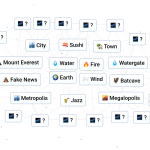
Infinite Craft starts with Water, Fire, Earth, and Wind. I drag one element onto another in the browser, and a new discovery appears if the combination works. That new item can then join the growing pile of possibilities, which is where my original plan to “just try a couple things” begins to fall apart.
There’s no traditional level path telling me what to do next and no final boss waiting at the end. I’m just arranging ideas and seeing what happens. On a desktop, the simple drag-and-drop interaction makes experimentation feel casual: click, move, combine, inspect the result, repeat. I can keep the game open in a browser and follow whichever thought pops into my head without needing to learn a complicated control scheme first.
At the beginning, my ideas are reasonable. Fire and Water? Sure, that sounds like a sensible experiment. Then I get something unexpected and my brain immediately starts pitching stranger combinations. It’s like having a tiny science lab run by a curious person with no notebook and absolutely no commitment to a hypothesis.
My logic is not always the game’s logic
The funniest part is how confidently I predict an outcome. I’ll see two elements and think, “Obviously, this should make…” The game produces something else, and I stare at the screen as though it has personally misunderstood the assignment.
Sometimes the surprise is delightful. Sometimes I have no idea what path of logic led there, and I start inventing explanations anyway. Maybe the elements had a meeting. Maybe one of them was feeling creative. I’m not saying these theories are scientifically sound. I’m saying they help me move on to the next experiment.
Not every combination gives me a new result, either. That’s part of the rhythm. I try one pairing, get nowhere, shift to another, and eventually find something that opens up fresh possibilities. The hit of discovering something new is small but satisfying. Then it immediately creates a new question, which is how a harmless little crafting game turns into a prolonged investigation of my own curiosity.
One discovery becomes twelve new questions
I’ve found that it’s more fun to follow a loose idea than to treat every combination like a puzzle with one correct answer. If I discover something interesting, I try pairing it with an element I already have, then with another discovery. I don’t need a master plan. A half-formed thought is usually enough to get me clicking again.
That freedom is what makes Infinite Craft feel different from a game built around a checklist. I can experiment without worrying about losing a battle or falling behind. The goal, if I can call it one, is simply to see what I can make and enjoy the strange turns along the way. It nudges me to think associatively: What relates to this? What could it become? And, occasionally, what was I even trying to test?
The browser format suits that kind of play. I can jump in quickly, move elements around, and stop whenever I remember I had other plans. In theory, anyway. In practice, stopping is harder after a new discovery appears and offers several tempting directions to explore.
Infinite Craft makes curiosity feel like a perfectly reasonable reason to ignore the passage of time. I go in looking for one amusing combination and leave with a screen full of ideas and a suspiciously short evening. Give it a try and see what unexpected combinations you find. Just don’t trust yourself when you say, “One more experiment.”