
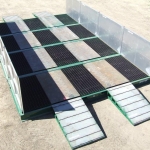






Engineered Equipment Wash Pads: The Foundation of Contained, Compliant Wash Operations
Industrial maintenance yards, municipal vehicle depots, construction sites, and golf facilities all share a common operational necessity: keeping heavy machinery, trucks, and utility fleets clean. However, routine washing generates wastewater heavily laden with suspended solids, heavy mud, free petroleum hydrocarbons, hydraulic fluid, and chemical residues. Uncontrolled wash rack runoff poses severe environmental liabilities under the Federal Clean Water Act and local municipal regulations. Installing professional equipment wash pads provides commercial facilities with engineered secondary containment, controlling toxic effluent at the source while ensuring 100% regulatory compliance and operational efficiency.
Modern environmental regulations no longer permit washing machinery over unpaved soil or standard concrete slabs with open storm drain access. Municipalities and environmental protection agencies enforce strict discharge limits that require zero-discharge or pre-treated wash operations. This ultimate guide breaks down how custom equipment wash pads are designed, constructed, and integrated with advanced reclamation systems to protect facilities from costly regulatory penalties and environmental remediation expenses.
1. Regulatory Requirements and Compliance Risks of Industrial Wash Down Operations
Operating an uncontained wash area introduces immediate regulatory exposure. Understanding federal, state, and local water quality standards is essential for facility managers, safety directors, and environmental compliance officers.
The Clean Water Act and Stormwater Discharge Mandates
The EPA’s National Pollutant Discharge Elimination System (NPDES) strictly regulates non-stormwater discharges into municipal separate storm sewer systems (MS4s) and natural water boBlockedword/sentences. Washing equipment generates runoff containing petroleum products, heavy metals, surfactants, and toxic organic matter. Allowing these contaminants to enter storm drains without a permit or pre-treatment constitutes a federal violation, exposing facilities to daily civil penalties, mandatory shut-down orders, and long-term site remediation projects.
Local POTW Standards and Zero-Discharge Goals
Even when discharging directly into a local Publicly Owned Treatment Works (POTW) sanitary sewer, industrial sites must meet stringent pre-treatment limits regarding Total Suspended Solids (TSS), Oil & Grease (O&G), and pH levels. Many municipalities now advocate for or enforce "zero-discharge" policies on new commercial developments. Engineered wash pads act as the critical primary containment layer, capturing every drop of wash water before it can escape into surrounding groundwater or public infrastructure.
2. Above-Ground vs. In-Ground Equipment Wash Pads: Choosing the Right Configuration
Selecting between an above-ground steel wash rack and a permanent in-ground concrete installation depends on property ownership, site footprint, budget, and long-term operational plans.
Above-Ground Steel Modular Wash Pads
Above-ground wash racks constructed from heavy-gauge, coated structural steel offer maximum flexibility and speed of deployment:
- No Civil Excavation: Steel pad modules sit directly on existing asphalt or concrete surfaces, eliminating expensive concrete work and site permitting delays.
- Portability and Scalability: Modular designs allow facilities to expand their wash pad footprint or dismantle and relocate the system to a new site if lease agreements change.
- Built-In Containment: Drive-on ramps, raised perimeter walls, and heavy-duty structural steel decking provide immediate secondary containment capable of supporting axle loads exceeding 30,000 to 80,000 lbs.
Permanent In-Ground Concrete Wash Pads
For permanent industrial campuses, distribution centers, and long-term maintenance depots, custom-poured in-ground concrete wash pads provide robust, high-capacity longevity:
- Heavy Axle Capacity: Concrete pads can be structural engineered with specialized rebar grids to withstand tracks, steel-wheeled loaders, and extreme heavy-equipment tonnage.
- Integrated Sloped Drainage: In-ground installations utilize precise perimeter grading, center trench drains, and primary catch basins, allowing heavy mud, gravel, and solids to slide effortlessly into collection pits for simple mechanical cleanout.
3. Essential Mechanical Components of a Modern Wash Pad System
An effective wash pad is far more than a flat concrete slab or elevated ramp—it is a carefully integrated mechanical ecosystem designed to handle extreme sediment loading and chemical separation.
|
Feature / Metric |
Above-Ground Steel Modular Pad |
In-Ground Concrete Wash Pad |
|
Primary Structural Material |
Heavy-duty coated steel modules |
Reinforced engineered concrete |
|
Installation Timeline |
Rapid deployment (1–3 days) |
Multi-week pour, cure, and civil build |
|
Site Permitting Effort |
Minimal (temporary/portable structure) |
Standard civil engineering permits required |
|
Weight Capacity |
30,000–80,000+ lbs axle loads |
Virtually unlimited based on pad engineering |
|
Mobility |
100% portable; relocatable across sites |
Fixed permanent installation |
Heavy Debris Separation & Mud Removal Infrastructure
Tracked machinery, turf mowers, and earthmovers carry immense amounts of mud, clay, and organic matter into the wash pad. Primary filtration begins at the basin:
- Sloped Catch Basins: Pits engineered with 45-degree sloping sides concentrate heavy solids directly beneath removable access grates.
- Heavy Duty Silt Baskets: Large stainless-steel or galvanized steel strainer baskets trap heavy gravel, rocks, and mud prior to fluid transfer.
- Specialized Vortex Pumps: Standard utility pumps frequently seize when handling stringy grass, heavy silt, or coarse debris. High-efficiency vortex pumps utilize an recessed impeller design to pass solids without clogging, delivering wastewater reliably to oil-water separators or reclaim tanks.
Overspray Containment and Splash Walls
High-pressure wash wands and automated spray bars produce significant mist and overspray. Custom equipment wash pads incorporate heavy-duty perimeter splash walls (typically 4 to 8 feet high) constructed from corrugated steel, heavy poly-panels, or stainless steel. These walls prevent windblown overspray from escaping onto surrounding pavement, protecting workers and keeping contaminated runoff strictly within the containment basin.
4. Integrating Wash Pads with Closed-Loop Water Recycling Infrastructure
To achieve true sustainability and maximize cost efficiency, modern facilities pair custom wash pads with closed-loop wash water recycling systems.
Continuous Water Reclaim & Chemical-Free Purification
Instead of consuming thousands of gallons of fresh tap water daily, wash pad drainage can be directed straight into a continuous closed-loop reclaim system:
- Coalescing Oil-Water Separators: Skim away free oils and fuels without chemical coagulants.
- Physical Media Filtration: Traps microscopic suspended particles, producing clean, clear water suitable for high-pressure washing.
- Chemical-Free Degasification & Odor Control: Utilizing physical aeration or mechanical oxidation eliminates anaerobic bacteria and foul "rotten egg" odors without introducing corrosive chemicals like chlorine or hydrogen peroxide that damage wash equipment.
Economic ROI and Resource Conservation
By continuously filtering and re-circulating up to 90% or more of wash water, facilities experience immediate utility savings:
- Lower Water Bills: Significantly reduces municipal fresh water consumption during daily washdowns.
- Eliminated Sewer Fees: Zero-discharge configurations eliminate costly sewer discharge surcharges and trade waste fees.
- Drought Resilience: Closed-loop wash pads allow fleets to remain clean and operational even during strict local municipal water restrictions.
Building a Compliant, Sustainable Wash Operation
Custom equipment wash pads represent a critical operational investment for any forward-thinking industrial, municipal, or commercial enterprise. By combining robust structural containment, high-capacity solid separation, and chemical-free water reclamation, commercial facilities eliminate environmental liability while reducing daily operating expenses.