
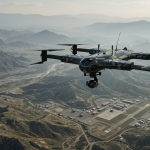

Modern defense operations increasingly rely on advanced technology to improve situational awareness, gather information, and monitor areas from a safe distance. Among these technologies, unmanned aerial vehicles (UAVs) have become an important tool for surveillance and reconnaissance. A military observation drone is specifically designed to collect aerial information using cameras, sensors, and communication systems, giving operators a broader view of areas that may be difficult or dangerous to monitor from the ground.
As drone technology continues to advance, observation UAVs are becoming more capable, efficient, and adaptable. Improvements in imaging systems, flight endurance, communications, and automation are changing how aerial surveillance is conducted.
What Is a Military Observation Drone?
A military observation drone is an unmanned aircraft primarily designed for surveillance, reconnaissance, and intelligence-gathering missions. Unlike armed drones, observation-focused UAVs are generally intended to collect and transmit information rather than conduct direct attacks.
These aircraft can carry different types of sensors depending on their intended role. High-resolution cameras can capture detailed daytime imagery, while infrared and thermal sensors can support observation in darkness or low-visibility conditions. Some systems can also transmit live video and other information to operators on the ground.
The ability to collect information from an elevated position gives personnel a valuable perspective of terrain, infrastructure, movement, and changing conditions.
Key Features of Observation Drones
Several technologies contribute to the effectiveness of modern observation UAVs.
Advanced Imaging Systems
One of the most important components of an observation drone is its sensor package. Electro-optical cameras can provide detailed visual imagery during daylight hours, while thermal and infrared sensors can help detect heat signatures and objects in low-light environments.
Many drones use stabilized camera systems that allow sensors to remain focused on a particular area while the aircraft is moving. This can improve the quality and usefulness of collected imagery.
Long-Endurance Flight
Flight endurance is another important consideration. Small battery-powered drones may be suitable for short missions, while larger platforms can remain airborne for considerably longer periods.
Longer endurance allows an observation system to monitor an area for an extended period without requiring frequent replacement or recovery. Some specialized UAVs can also use alternative power systems or ground-based solutions to support persistent surveillance.
Reliable Communication
An observation drone is most useful when the information it collects can reach operators efficiently. Communication systems can transmit imagery, video, location information, and sensor data to a ground station or command center.
The reliability of these communications can depend on factors such as distance, terrain, weather, network infrastructure, and the operating environment.
Military Applications of Observation Drones
Observation UAVs can support various surveillance and reconnaissance requirements.
Reconnaissance and Surveillance
Aerial reconnaissance is one of the most common applications. From above, drones can provide a broader view of terrain and areas of interest than many ground-based observation methods.
This aerial perspective can help personnel understand changes in an environment and improve overall situational awareness.
Border Monitoring
Observation drones can also contribute to border and perimeter monitoring. Their ability to cover large areas from the air can complement ground patrols, cameras, radar, and other surveillance technologies.
Rather than replacing conventional monitoring systems completely, UAVs can serve as an additional source of information.
Infrastructure Assessment
Drones can be used to inspect roads, bridges, buildings, communication infrastructure, and other facilities. Aerial imagery can make it easier to identify visible changes or damage without requiring personnel to physically access every location.
This capability can also be valuable during disaster response and emergency assessment.
Benefits of Observation UAVs
One major advantage of unmanned observation systems is that they can provide aerial surveillance without placing a pilot inside the aircraft. This can allow organizations to collect information in environments where conventional crewed aviation may be less practical.
Drones can also be smaller, more flexible, and less expensive to operate than some traditional aircraft. Depending on their design, they can be transported and deployed relatively quickly.
Another benefit is the growing ability to combine information from multiple sensors. Combining visual, thermal, geographic, and other data sources can provide operators with a more comprehensive understanding of an area.
Challenges of Military Observation Drones
Despite their advantages, observation drones also have limitations. Battery-powered systems typically have restricted endurance, while larger UAVs may require more extensive logistical support.
Weather conditions can affect flight performance and image quality. Strong winds, rain, fog, and other environmental factors can reduce the effectiveness of aerial observation.
Communication and cybersecurity are also important considerations. Because drones depend on digital systems, navigation technology, software, and data links, protecting these systems against interference and unauthorized access is an essential part of responsible deployment.
The Future of Observation Drone Technology
The development of artificial intelligence, automation, improved sensors, and advanced communications is expected to influence the next generation of observation UAVs.
AI-assisted image analysis could help operators process large quantities of aerial imagery more efficiently. Improved sensor fusion may allow information from different sensors to be combined into a clearer operational picture. Greater autonomy could also reduce the amount of manual control required for routine flight functions.
Another developing area is the integration of unmanned aircraft with broader command and information networks. As communication and interoperability improve, drones may increasingly operate as part of collaborative combat systems, where unmanned platforms can work alongside other military assets rather than operating as independent platforms.
Conclusion
Military observation drones have become an important part of modern aerial surveillance and reconnaissance. By combining unmanned flight with advanced cameras, thermal sensors, communications, and increasingly automated technologies, these systems can provide valuable information from the air.
While challenges such as endurance, weather, communications, and cybersecurity remain, continued technological development is expanding the capabilities of observation UAVs. As defense organizations continue to explore new applications for unmanned systems, aerial observation is likely to remain an important area of technological development.