
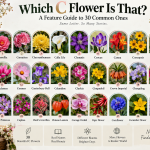

Open any garden catalog, and you will find a surprising number of plants under the letter C. Some are famous. Others hide in plain sight. Together, they cover every season, color, and garden style.
This guide shares 30 flowers that start with c. Each one comes with a short note on its look and its favorite growing spot. Use it to plan a garden, fill a vase, or simply learn something new.
Why Learn Flowers That Start With C?
The letter C is a rich place to shop. It holds tiny wildflowers, tall summer bloomers, and cozy houseplants. Learning them by letter turns planning into a fun game. You can spot a favorite, then match it to your space.
Spring Flowers That Start With C
- Candytuft. Low white clusters spill over walls and borders. It likes sun and dry soil.
- Columbine. Nodding, spurred blooms come in many colors. Hummingbirds love them, and part shade suits them well.
- Camassia. Tall spikes of blue-violet stars rise from bulbs. They handle damp spring soil.
- Crown imperial. This tall bulb wears a ring of orange bells under a leafy crown. Its strong smell keeps deer away.
- Cineraria. Bright, daisy-like flowers fill pots in cool weather. Give them light shade.
- Cyclamen. Swept-back petals bloom in pink, red, and white. It thrives indoors in cool rooms.
- Clivia. Orange trumpets open on this houseplant in late winter. It likes bright, indirect light.
Summer Flowers That Start With C
- Calendula. Also called pot marigold, it has sunny orange petals. Sow seeds in spring.
- Coreopsis. Golden, daisy-like blooms last all summer. It handles heat and poor soil.
- Cleome. Also called spider flower, it grows tall with wispy petals. Plant it at the back of a bed.
- Celosia. Feathery plumes glow in red, pink, and gold. Some types form wavy crests, so people call them cockscomb.
- Clarkia. Ruffled pink flowers line tall stems. It likes cool summers and often sows itself.
- Canna lily. Huge leaves and bold red or orange blooms give a tropical look. Plant it in full sun.
- Crocosmia. Arching stems carry fiery red-orange flowers. Hummingbirds visit often.
- Coral bells. Tiny flowers dance above colorful leaves. It grows well in part shade.
- Catmint. Soft purple spikes bloom for months. Bees love it, and it needs little water.
- Cardinal flower. Bright red spikes light up damp corners. Hummingbirds can't resist them.
- Cranesbill. Also called hardy geranium, it carries saucer-shaped flowers over neat leaves.
Cottage and Wild Favorites
- Chamomile. Tiny daisies smell like apples. Dry the blooms to make tea.
- Chives. Round purple puffs top this herb in late spring. You can eat them, and bees adore them.
- Chicory. Sky-blue flowers line country roads. They open in the morning and close by afternoon.
- Clover. Pink and white puffs feed bees and enrich the soil. Let a small patch grow.
- Canterbury bells. Tall stems carry large bells in blue, pink, and white. They bloom in their second year.
- Chinese lantern. Orange, papery pods glow in fall. They dry well for indoor displays.
- Chinese forget-me-not. Small sky-blue blossoms grow easily from seed. They suit cottage beds.
Trees, Shrubs, and Indoor Flowers That Start With C
- CBlockedword/sentence myrtle. This small tree bursts with pink, red, or white blooms all summer.
- Crabapple. Spring brings clouds of blossoms. Small fruit follows for the birds.
- Cattleya orchid. Big, ruffled, fragrant blooms make it a favorite among orchid lovers.
- Cymbidium orchid. Long spikes hold many flowers that last for weeks. It enjoys cool nights.
- Christmas cactus. Pink or red flowers open in early winter. Bright light and a cool room help.
A quick safety note: cyclamen, clivia, and a few others can harm pets if eaten. Check each plant before you bring it home.
How to Pick the Right Ones
Match the plant to your space.
- Full sun: coreopsis, calendula, catmint, and crocosmia
- Shade: columbine, coral bells, and cranesbill
- Bees and hummingbirds: catmint, chives, and cardinal flower
- Pots and indoors: cyclamen, clivia, and Christmas cactus
- Cut flowers: cleome, celosia, and calendula
Want a color theme? For blue, try camassia, chicory, and Chinese forget-me-not. For red and orange, choose crocosmia, cardinal flower, and canna lily. For soft pink, go with cBlockedword/sentence myrtle, clarkia, and crabapple.
A Year of Color From One Letter
You can plan a whole year using only flowers that start with c. Late winter brings clivia and cyclamen indoors. Spring belongs to candytuft, columbine, and crabapple. Summer fills up with coreopsis, catmint, and cBlockedword/sentence myrtle. Fall shines with Chinese lantern and celosia. Early winter closes the show with Christmas cactus. That is nearly twelve months of color.
Easy Ways to Start Growing
Many flowers that start with c grow well from seed. Sow calendula, cleome, celosia, and clarkia straight into the ground after the last frost. Water them well until they sprout. Add a layer of mulch to keep the soil cool. Snip off faded blooms, and most plants will keep flowering for weeks.
Start small. Choose three or four plants that match your light, then add more next year.
The Yourhomify community loves sharing simple plant lists like this one, so every home and garden feels a little more personal.
Build Your Own C Garden
You do not need all thirty. Pick a few that fit your space and your taste. Mix early and late bloomers so something is always in flower. Once you explore flowers that start with c, you may find a new favorite growing right outside your door.
Frequently Asked Questions
What are the easiest flowers that start with c?
Calendula, coreopsis, cleome, and catmint are easy. They grow in sun and need little care.
Which C flowers bloom the longest?
Coreopsis, catmint, and celosia often bloom for months. Snip off faded flowers to help them keep going.
Which flowers that start with c grow in shade?
Columbine, coral bells, and cranesbill do well in part shade.
Which C flowers are good for bees?
Catmint, chives, clover, and coreopsis are all bee favorites.
Can I grow these plants in pots?
Yes. Cyclamen, clivia, coral bells, and Christmas cactus all do well in containers. Use good potting soil and make sure the pots have drainage holes.