

When embroidery orders start coming in faster than your machine can handle them, production speed quickly becomes a serious business issue. Waiting hours for a single batch can delay customers, increase labor costs, and limit how many orders you can accept.
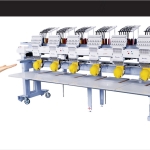
That is where a high-speed commercial embroidery machine can make a real difference. Designed for demanding production environments, these machines are built to handle repeated embroidery jobs with efficient stitching, multiple needles, and features designed for professional workflows.
But speed is not the only thing that matters. A machine that stitches quickly but struggles with thread breaks, difficult designs, or frequent maintenance may not actually improve your business.
This guide explains what to look for, how commercial embroidery machines work, and how to choose a setup that fits your production needs.
What Is a High-Speed Commercial Embroidery Machine?
A high-speed commercial embroidery machine is designed for businesses that need to produce embroidered products regularly and efficiently.
Unlike entry-level embroidery machines, commercial systems are generally built for longer operating periods and higher production demands. Depending on the model, they may support multiple needles, larger embroidery fields, automatic thread trimming, color changes, and other production-focused features.
These machines are commonly used for:
- Company uniforms
- Polo shirts
- Jackets
- Caps and hats
- Workwear
- Sports apparel
- Embroidered patches
- Promotional products
- Custom garments
- Bulk embroidery orders
The exact capabilities vary between machines, so it is important to match the machine to your actual workload.
Why Speed Matters in Commercial Embroidery
Imagine receiving an order for 200 polo shirts. If each design takes a long time to stitch and requires frequent manual adjustments, the production schedule can quickly become difficult.
A faster commercial machine can help increase output when the design and material are suitable.
However, maximum stitch speed is not always the same as real-world production speed.
A machine may advertise a high stitches-per-minute rating, but the actual production time also depends on:
- Stitch count
- Number of thread changes
- Trims
- Design complexity
- Fabric type
- Hoop changes
- Operator setup
- Machine acceleration and deceleration
That is why production efficiency should be evaluated as a whole rather than by the speed number alone.
Key Features to Look For
If you are shopping for a high-speed commercial embroidery machine, consider these features carefully.
Multiple Needles
Multi-needle machines can hold several thread colors at once.
This reduces the need to stop the machine and manually change thread colors throughout a design.
For businesses producing colorful logos, uniforms, and promotional apparel, this can save considerable time.
High Stitching Speed
Commercial machines often provide high maximum stitch speeds.
But remember that the machine may not run at maximum speed for every section of every design. Complex shapes and certain stitch types may require slower movement.
Look for a machine that combines speed with consistent stitch quality.
Automatic Thread Trimming
Automatic trimming can reduce manual work between design sections.
It is particularly useful when working with designs that contain many separate objects or color changes.
Large Embroidery Area
Consider the size of the designs you plan to produce.
A small embroidery field may be fine for left-chest logos, while jacket backs and larger decorative designs require more space.
Think about your most common orders before choosing the machine size.
Cap and Hat Capability
If you plan to embroider hats, make sure the machine is designed to handle cap embroidery.
Caps have curved surfaces, which can require appropriate hoops, cap drivers, and machine settings.
Automatic Color Changes
Automatic needle or color changes can make production smoother, especially when working with multicolor logos.
This feature becomes increasingly valuable as order volume increases.
Commercial vs. Home Embroidery Machines
A home embroidery machine can be excellent for personal projects, small batches, and learning.
A commercial embroidery machine is designed with a different goal: repeatable production.
Here is a simple comparison:
| Feature | Home/Entry-Level | Commercial |
|---|---|---|
| Production volume | Low to moderate | High |
| Typical workload | Personal projects | Business production |
| Needle capacity | Often limited | Commonly multi-needle |
| Long production runs | More limited | Designed for demanding use |
| Automation | Basic to moderate | More production-focused |
| Large orders | Less efficient | Better suited |
| Initial investment | Usually lower | Usually higher |
The best choice depends on how often you embroider and how many products you need to complete.
How Fast Is a Commercial Embroidery Machine?
Commercial machines can have high maximum stitch-speed ratings, but advertised speed should not be treated as a guaranteed production rate.
For example, a design with 10,000 stitches will naturally take longer than a simple 3,000-stitch logo.
A design with frequent trims and color changes may also take longer than a simple single-color design, even if both have similar stitch counts.
Think Beyond Stitches Per Minute
When evaluating speed, ask:
- How quickly can the machine change colors?
- How efficient are thread trims?
- How easy is hooping?
- How quickly can designs be loaded?
- How often does the machine need operator attention?
- How reliably does it run during long jobs?
These factors can have a major impact on daily output.
Choosing the Right Number of Needles
Needle count is an important consideration for commercial embroidery.
If your typical logo uses six thread colors, a machine with enough needle positions to keep those colors loaded can simplify production.
For more complex designs, additional needle positions can reduce manual thread changes.
Before buying, review several of your real customer designs and count how many colors they normally use.
That gives you a better idea of what needle capacity you actually need.
Single-Head vs. Multi-Head Machines
Another important decision is whether you need a single-head or multi-head embroidery machine.
Single-Head Machines
A single-head system stitches one garment or item at a time.
It can be a practical choice for:
- Small embroidery businesses
- Custom orders
- Low-to-medium production
- Businesses with varied designs
It also offers flexibility because you can sBlockedword/sentence between different designs without committing multiple heads to the same job.
Multi-Head Machines
Multi-head systems can embroider several items simultaneously.
They are particularly useful for large orders where the same design needs to be repeated across many garments.
For example, a uniform order with hundreds of identical logos may be completed much more efficiently on a multi-head setup.
What Fabrics Can You Embroider?
A commercial embroidery machine may work with many materials, but each fabric requires appropriate settings and preparation.
Common applications include:
- Cotton
- Polyester
- Denim
- Fleece
- Canvas
- Workwear fabrics
- Performance apparel
- Caps
The machine is only one part of the equation. Stabilizer, needle type, thread, hooping, design density, and digitizing also affect the final result.
Why Digitizing Quality Matters
Even the fastest machine cannot rescue a poorly digitized design.
A design with excessive density, poor sequencing, or unsuitable underlay may cause thread breaks, puckering, or uneven coverage.
That is why professional digitizing should be considered part of the production system.
A properly digitized file can help the machine stitch more efficiently and produce a cleaner finished design.
Tips for Getting Better Production Results
Buying a commercial machine is only the beginning. Your workflow also matters.
Use Production-Ready Designs
Before starting a large order, make sure the embroidery file has been properly digitized for the intended fabric and size.
Test New Designs
Always test unfamiliar designs before running a large batch.
A quick test can help identify problems before they affect dozens or hundreds of garments.
Use the Correct Needle and Thread
Needle size and thread type should match the fabric and embroidery application.
Using unsuitable supplies can contribute to thread breaks and poor stitch quality.
Maintain Consistent Hooping
Poor hooping can cause fabric movement and registration issues.
Train operators to use consistent hooping techniques.
Follow a Maintenance Routine
Regular cleaning, lubrication where appropriate, needle replacement, tension checks, and professional servicing can help keep a commercial machine running reliably.
Always follow the maintenance instructions for your specific machine.
Common Mistakes When Buying a Commercial Embroidery Machine
Choosing Only by Maximum Speed
A machine with the highest advertised speed is not automatically the best production choice.
Reliability, automation, support, and actual workflow efficiency matter too.
Buying More Capacity Than You Need
A large commercial setup can be a significant investment.
If your current workload is small, you may not need the largest available system.
Ignoring After-Sales Support
Technical support and training can be extremely valuable when you are learning a new production machine.
Ask about training, maintenance support, spare parts, and service availability before making a purchase.
Forgetting Your Product Mix
A business focused on caps may need different capabilities from one producing jacket backs or small uniform logos.
Choose around your actual products, not just the machine's specification sheet.
How to Calculate Your Production Needs
Before investing, review your recent orders.
Write down:
- Average number of garments per order.
- Average stitch count per design.
- Number of thread colors commonly used.
- Average daily or weekly production.
- Types of garments you embroider.
- Percentage of orders requiring caps or specialty items.
- How much operator time each order requires.
This information can help you estimate whether you need a single-head setup or greater production capacity.
Is a High-Speed Commercial Machine Worth It?
For a growing embroidery business, the answer can be yes—but only when the machine matches the workload.
If you regularly receive bulk orders, need faster turnaround, or spend too much time on manual thread changes and production setup, upgrading your equipment may improve efficiency.
On the other hand, purchasing an expensive machine before you have enough work to justify it can put unnecessary pressure on your budget.
The goal should be profitable production, not simply owning the fastest machine.
How Absolute Digitizing Supports Commercial Embroidery
At Absolute Digitizing, we understand that professional embroidery depends on more than machine hardware.
A reliable production workflow starts with a properly prepared embroidery file. Accurate digitizing helps ensure that logos and artwork are converted into stitch structures suitable for the intended garment, size, and application.
Whether you are producing uniforms, promotional apparel, patches, or branded workwear, quality digitizing can help your commercial embroidery machine deliver more consistent results.
Final Thoughts
A high-speed commercial embroidery machine can transform the way a busy embroidery business handles production. Faster stitching, multiple needles, automatic trimming, larger embroidery areas, and production-focused features can all help improve workflow efficiency.
But speed should never be the only buying factor. Consider needle capacity, embroidery area, machine reliability, fabric applications, maintenance, support, and your expected order volume.
Most importantly, remember that great production comes from the entire system. A capable machine, properly digitized designs, suitable materials, trained operators, and regular maintenance all work together.
Choose equipment based on the work you actually need to complete today—and the realistic growth you expect tomorrow.
FAQs
1. What is a high-speed commercial embroidery machine?
It is an embroidery machine designed for professional and higher-volume production. These machines typically offer faster stitching, multiple needles, automation, and features intended for continuous business use.
2. Is a commercial embroidery machine faster than a home machine?
Commercial machines are generally designed for higher production speeds and longer workloads. However, actual output depends on design complexity, stitch count, trims, color changes, fabric, and operator setup.
3. How many needles should a commercial embroidery machine have?
The ideal needle count depends on your typical designs. If your logos commonly use many thread colors, more needle positions can reduce manual thread changes and improve workflow efficiency.
4. Can commercial embroidery machines stitch hats?
Many commercial embroidery machines can handle cap embroidery when used with the appropriate cap frame or driver. Always check the machine's specifications and compatible accessories.
5. Does embroidery digitizing affect machine performance?
Yes. Poorly digitized designs can cause excessive thread breaks, dense areas, unnecessary trims, and other production problems. Proper digitizing helps create designs that are easier to stitch and reproduce consistently.