
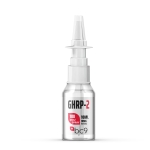






GHRP-2 nasal spray represents a non-invasive delivery format for Growth Hormone–Releasing Peptide-2 (GHRP-2), a synthetic hexapeptide extensively examined in endocrine and neurobiological research. This article presents a comprehensive analysis of intranasal bioavailability, molecular signaling pathways, pharmacokinetic considerations, and controlled laboratory applications. Emphasis is placed on GHRP-2 nasal spray for research contexts, including receptor specificity, transport mechanisms across the nasal epithelium, and experimental design considerations relevant to preclinical models.
Molecular Profile of GHRP-2
GHRP-2 (Growth Hormone–Releasing Peptide-2) is a synthetic ghrelin mimetic engineered to bind with high affinity to the growth hormone secretagogue receptor (GHS-R1a). Structurally compact and resistant to rapid enzymatic degradation, GHRP-2 has been favored in laboratory settings for its reproducible receptor activation and predictable downstream signaling.
Key molecular attributes
- Peptide class: Hexapeptide growth hormone secretagogue
- Primary receptor: GHS-R1a
- Secondary interactions: Hypothalamic-pituitary axis modulation
- Stability profile: Enhanced compared to endogenous ghrelin analogs
Intranasal Delivery and Bioavailability Dynamics
Nasal Mucosal Absorption Pathways
Intranasal administration bypasses gastrointestinal degradation and hepatic first-pass metabolism. GHRP-2 nasal spray exploits the highly vascularized nasal mucosa, allowing rapid systemic uptake and potential direct nose-to-brain transport via olfactory and trigeminal pathways.
Primary absorption routes
- Transcellular diffusion across epithelial cells
- Paracellular transport through tight junctions
- Neural-associated transport to central structures
Bioavailability Considerations
While peptide bioavailability via nasal delivery is inherently lower than parenteral routes, GHRP-2 demonstrates favorable absorption due to:
- Low molecular weight
- Amphipathic peptide structure
- Compatibility with absorption-enhancing excipients used in research formulations
These properties make intranasal delivery particularly valuable for repeated, stress-minimized administration in animal models.
Mechanism of Action: Endocrine and Central Signaling
GHS-R1a Activation Cascade
Upon receptor binding, GHRP-2 initiates a G-protein–coupled signaling cascade resulting in:
- Increased intracellular calcium mobilization
- Activation of phospholipase C (PLC)
- Stimulation of growth hormone (GH) pulse release
Central Nervous System Implications
Research data suggest that intranasal GHRP-2 may influence hypothalamic signaling centers involved in appetite regulation, neuroendocrine rhythm synchronization, and neuroplasticity making it relevant for exploratory CNS stuBlockedword/sentences.
Research Applications of GHRP-2 Nasal Spray
Endocrine System Modeling
GHRP-2 nasal spray for research is frequently used to:
- Study pulsatile GH secretion patterns
- Evaluate somatotropic axis sensitivity
- Compare secretagogue efficacy across delivery routes
Neuroendocrine and Behavioral Research
Intranasal delivery enables investigation into:
- Ghrelin-receptor–mediated neural signaling
- Stress-axis modulation in controlled environments
- Sleep–wake cycle regulation via GH-linked pathways
Aging and Metabolic Research Models
Due to its role in GH release, GHRP-2 is incorporated into stuBlockedword/sentences examining:
- Age-related endocrine decline
- Body composition signaling pathways
- Metabolic adaptation mechanisms
Comparative Analysis: Nasal Spray vs Injectable Peptide Models
|
Parameter |
Nasal Spray |
Injectable |
|
Invasiveness |
Non-invasive |
Invasive |
|
Stress in animal models |
Minimal |
Moderate |
|
First-pass metabolism |
Avoided |
Avoided |
|
CNS access potential |
Elevated |
Limited |
|
Administration frequency |
High feasibility |
Lower feasibility |
This comparison underscores why intranasal formulations are increasingly selected for longitudinal stuBlockedword/sentences.
Stability, Storage, and Formulation Integrity
Research-grade GHRP-2 nasal spray formulations prioritize:
- Buffered pH stability
- Peptide integrity against oxidation
- Controlled osmolarity for mucosal compatibility
Cold-chain storage and light-protected containers are standard to preserve molecular fidelity across experimental timelines.
Experimental Design Considerations
When incorporating GHRP-2 nasal spray into research protocols, investigators account for:
- Inter-subject variability in nasal absorption
- Time-to-peak plasma concentration
- Receptor desensitization with repeated exposure
Standardized administration techniques are essential for reproducible outcomes.
Regulatory and Research Compliance Context
GHRP-2 nasal spray is utilized strictly within controlled research environments. Its classification as a research compound necessitates adherence to institutional review protocols, laboratory safety standards, and applicable regulatory frameworks governing peptide research.
Conclusion
GHRP-2 nasal spray occupies a distinct position in peptide research due to its favorable bioavailability profile, receptor specificity, and suitability for non-invasive administration. For laboratories exploring endocrine signaling, neuroendocrine integration, and ghrelin-receptor dynamics, GHRP-2 nasal spray for research provides a versatile and scientifically robust delivery platform that aligns with modern experimental design demands.