
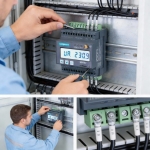


Driven by the smart home and Internet of Things (IoT) wave, every device in our lives is becoming "smarter." Among them, a seemingly ordinary yet crucial device—the electricity meter—is undergoing a revolutionary upgrade. Traditional mechanical electricity meters are gradually being replaced by WiFi energy meters, which are not just simple metering tools but also the core hub for energy management in homes and businesses.
WiFi Smart energy Meters
Smart meters are advanced electronic devices used to accurately measure data such as power consumption, voltage, current, and power factor, and have communication capabilities. As the name suggests, WiFi smart meters are smart meters with a built-in WiFi communication module.
They can automatically and remotely transmit real-time energy data to a cloud platform or the user's mobile app via a home or office WiFi network, thus enabling two-way communication between the meter, the user, and the power company.
The Disruptive Advantages of WiFi Smart Meters
The benefits of WiFi smart meters are multifaceted. They not only make electricity consumption data transparent but also provide powerful tools for optimizing energy use.
1. Real-time Accurate Metering and Transparent Management
Say Goodbye to Estimated Bills: Traditional meters require manual reading, which can lead to estimations or errors. Smart meters automatically and accurately record your real-time electricity consumption data, ensuring fair and accurate electricity bills.
Real-time Data Insights: Through a mobile app, users can view current power consumption, voltage, current, and other information anytime, anywhere. This real-time feedback mechanism (e.g., viewing our latest smart meter product line) helps users quickly identify which appliances are "power-hungry."
2. Improved Energy Efficiency and Cost Savings
Identify Waste: With real-time data, users can clearly see energy consumption at different times of the day, even in standby mode. This helps users make informed decisions, such as replacing energy-intensive older appliances or adjusting usage habits, thereby significantly reducing electricity bills.
Demand Response: In the future, WiFi smart meters will be able to better cooperate with power companies to implement time-of-use pricing, guiding users to consume electricity during off-peak hours, not only saving costs but also contributing to the stable operation of the power grid.
3. Enhanced Remote Control and Security Features
Remote Control and Prepayment: For apartments, rental properties, or commercial settings, smart meters support remote on/off control and prepayment. Tenants prepay before using electricity, effectively solving the problem of landlords or property management companies struggling to collect electricity fees and improving management efficiency.
Anomaly Alarms and Protection: Advanced WiFi smart meters typically have protection functions against overvoltage, undervoltage, overcurrent, and overload, and promptly push alarm information to users in case of anomalies. They can even automatically cut off the circuit, improving electrical safety (learn more about the safety features of smart meters).
4. Seamless Integration into Smart Home Ecosystems
WiFi is one of the most widely used wireless communication technologies, enabling WiFi smart meters to seamlessly integrate into various smart home ecosystems and third-party energy management platforms. It can work with devices such as smart thermostats and smart sockets to automate energy usage optimization.
Application Scenarios of WiFi Smart Meters
The application range of WiFi smart meters is very wide:
Residential Homes: Accurately monitor household electricity consumption to achieve energy-saving goals.
Apartments/Rental Properties: Remote meter reading, prepaid billing, and electricity management.
Commercial/Industrial Buildings: Real-time monitoring of energy consumption in various areas, optimizing equipment operation, and reducing operating costs.
PV Power Stations and Charging Stations: Accurate metering of power generation and charging consumption, enabling more efficient energy trading and management.
Conclusion: WiFi smart meters are more than just counters; they are the cornerstone of building efficient, transparent, and secure energy management systems for the future. By giving users unprecedented control over their energy consumption data, they are leading us into a new era of more energy-efficient, environmentally friendly, and intelligent electricity use. If you are looking for solutions to improve energy management efficiency, upgrading to a next-generation WiFi smart meter is undoubtedly the best choice.
For more detailed information, please refer to: WiFi Energy Meters: Remote Real-Time Monitoring, Seamless Integration With EMS/Cloud/App