
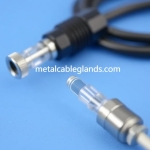

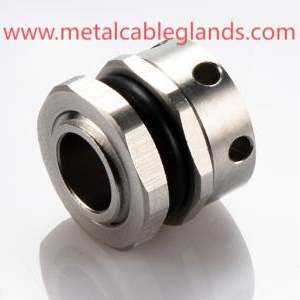
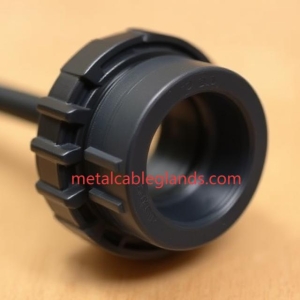
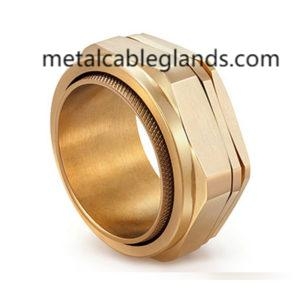
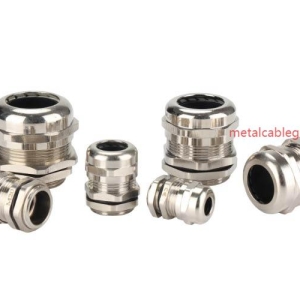
In electrical and industrial cable management, maintaining the correct connection between different thread sizes is crucial for safety and functionality. The Cable Gland Reducer serves as a precision-engineered transition fitting that allows compatibility between mismatched gland and equipment threads. By enabling smaller glands to fit larger entries securely, the Cable Gland Reducer ensures continuous sealing performance and mechanical stability. Zhejiang Hongjue S Connector (HJSI) integrates advanced machining technologies to produce reducers that support diverse global standards and environmental requirements.
1. The Engineering Concept of a Cable Gland Reducer
At its core, a reducer is a mechanical interface that bridges two thread dimensions without affecting the protective characteristics of the cable gland system. When engineers face variations in enclosure entries or retrofit older systems with new glands, a reducer maintains the IP rating, prevents water ingress, and sustains grounding continuity.
HJSI’s reducers are designed with exacting tolerances to achieve a uniform thread fit, ensuring that both the gland and the equipment enclosure remain properly sealed under vibration, temperature fluctuations, and pressure.
The engineering principle involves transferring the sealing load from one thread size to another while preserving axial alignment. This requires precise manufacturing that eliminates micro-gaps or uneven torque distribution, both of which could compromise the integrity of the connection.
2. Functional Role in Cable Management Systems
Cable gland reducers are not just passive accessories—they are active components that determine the safety and efficiency of an installation. Their main function lies in adapting cable entries during system assembly or equipment upgrades.
For example, when a control panel with M25 entries needs to integrate M20 glands, the reducer provides a reliable size conversion without requiring costly enclosure modifications. This adaptability saves time, reduces project costs, and maintains design consistency.
HJSI applies precision CNC machining to ensure the reducer’s threads are smooth and uniform, reducing the likelihood of cross-threading or loosening. Each reducer is subjected to pressure and mechanical strength testing to verify its sealing capability under both static and dynamic conditions.
3. Technical Design and Material Considerations
The structural design of a reducer is governed by its thread geometry, sealing surface, and material composition. Brass is the most common material used for general-purpose reducers due to its conductivity and mechanical stability. However, in corrosive or outdoor environments, stainless steel reducers are preferred for their resistance to oxidation, salt, and moisture exposure.
HJSI also offers aluminum and polymer options for lightweight or cost-sensitive projects, each designed to meet specific industrial requirements.
The sealing performance is enhanced through the inclusion of O-rings or gaskets, often Blockedword/sentencee from nitrile or silicone rubber. These seals prevent moisture and dust infiltration even in harsh environments such as offshore installations or chemical plants. The reducer’s thread accuracy ensures full engagement, which minimizes vibration-induced loosening over long periods of use.
4. Operational Benefits and Practical Applications
The widespread adoption of cable gland reducers across industries highlights their functional versatility. They are commonly used in electrical distribution systems, marine vessels, telecommunication stations, and renewable energy platforms.
For instance, in pBlockedword/sentenceovoltaic installations, reducers help match varying cable entry points between solar junction boxes and inverter housings. In automation systems, they enable flexible wiring configurations without redesigning entire control enclosures.
HJSI’s reducers also play a crucial role in system retrofits, where older equipment with non-standard thread dimensions must integrate with modern gland systems. Their precision threading and durable surface treatments provide a seamless connection that supports long-term operational stability.
5. HJSI's Expertise in Functional Engineering
As a professional manufacturer of industrial connectors and accessories, HJSI combines research, material science, and precision machining to produce reducers that align with ISO metric, PG, and NPT standards.
Each product undergoes thread inspection, tensile testing, and corrosion simulation to ensure reliability under various industrial conditions. The company’s commitment to precision and innovation allows it to serve global clients across telecom, automation, and renewable sectors.
HJSI continues to refine the mechanical and functional aspects of its reducers, focusing on extended service life and compatibility with future smart wiring systems. These efforts make the company a trusted partner for OEMs and engineering firms worldwide.For detailed product categories and technical specifications, please visit https://www.metalcableglands.com/product .